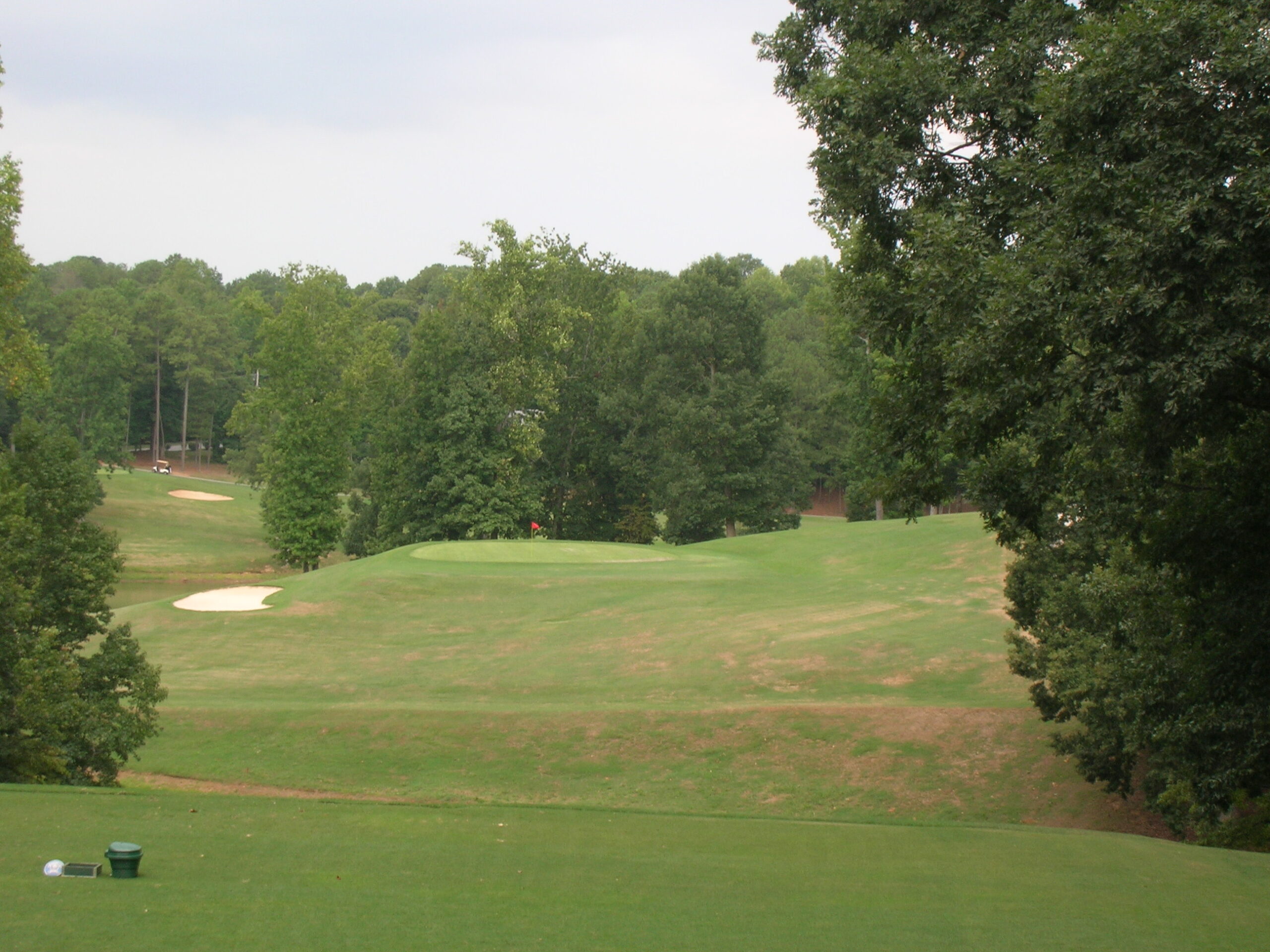
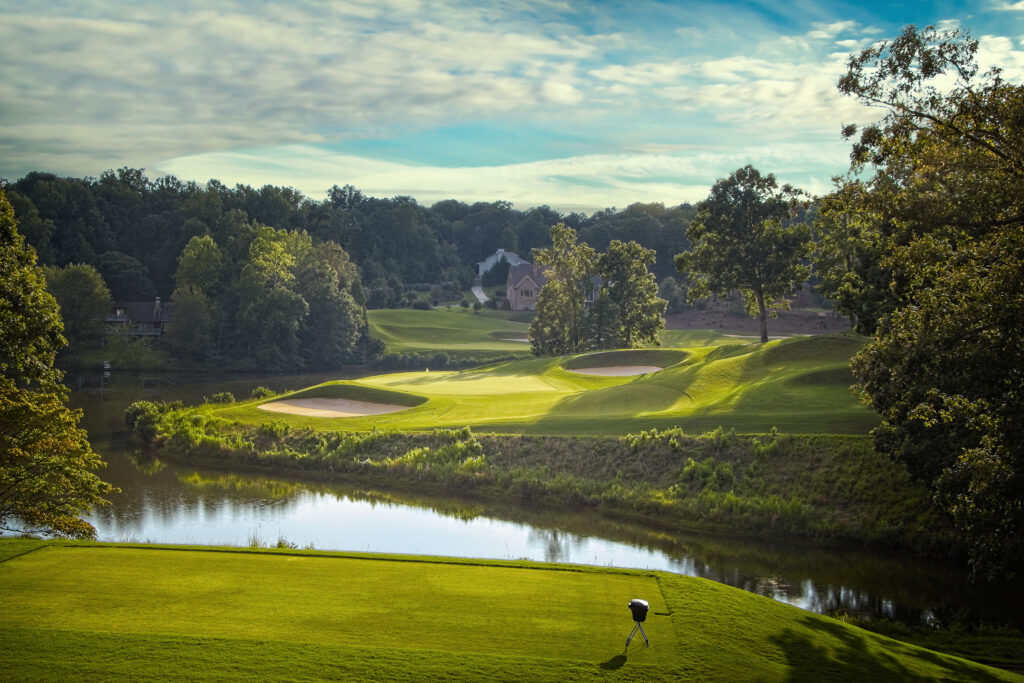
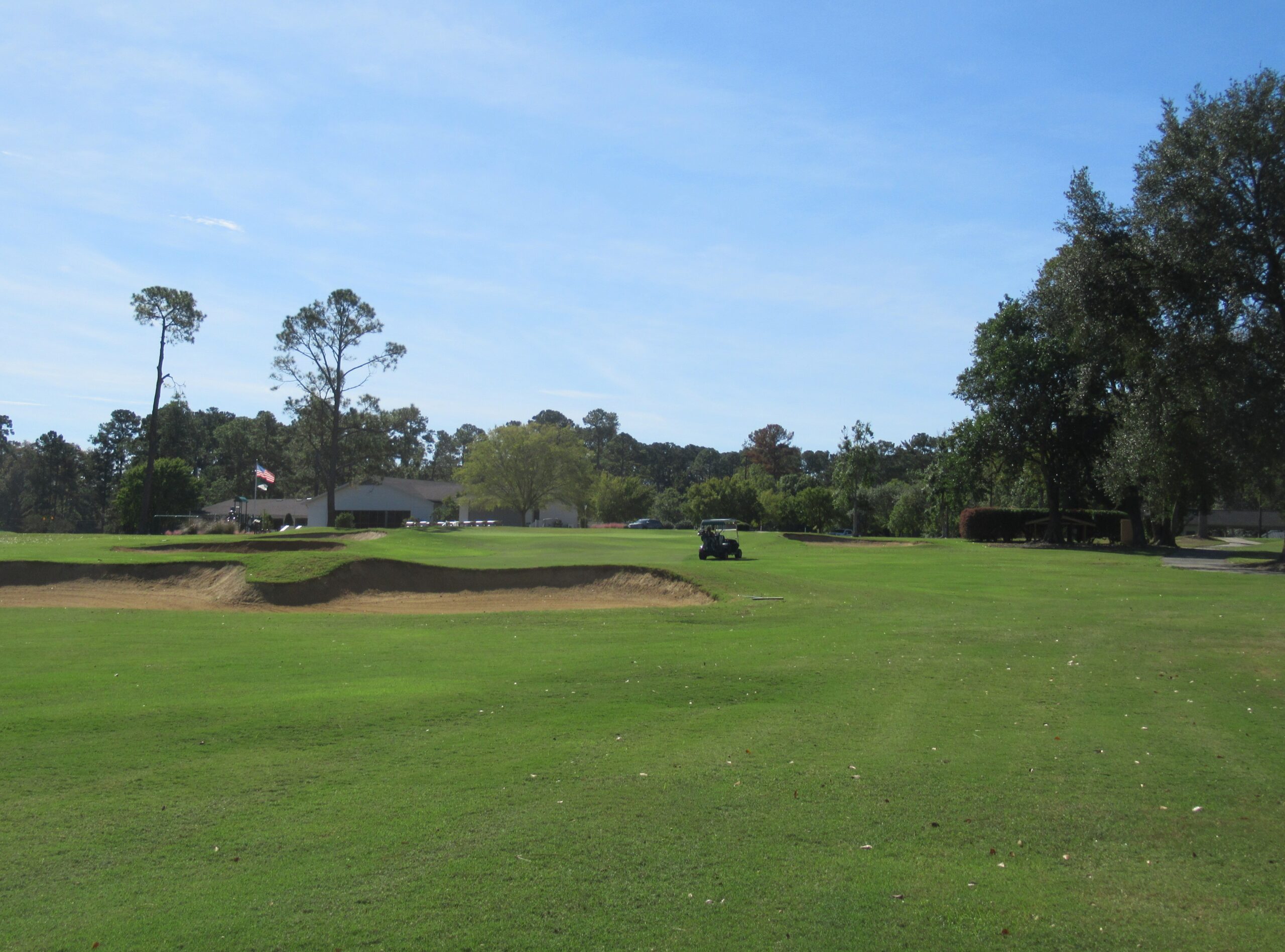
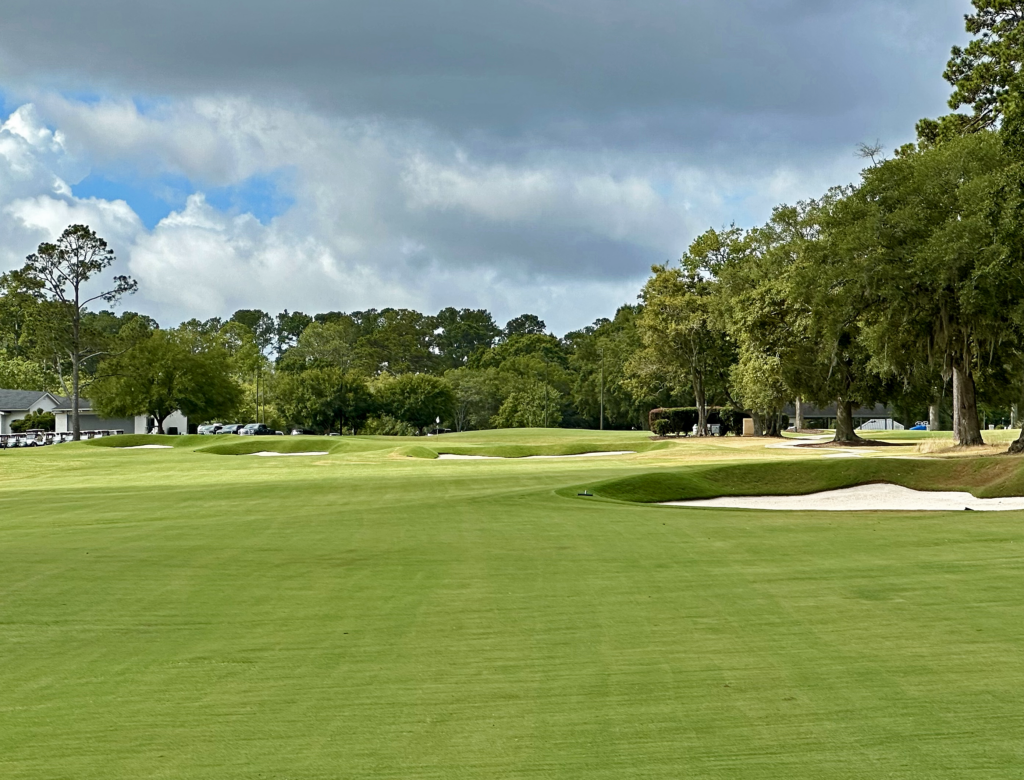
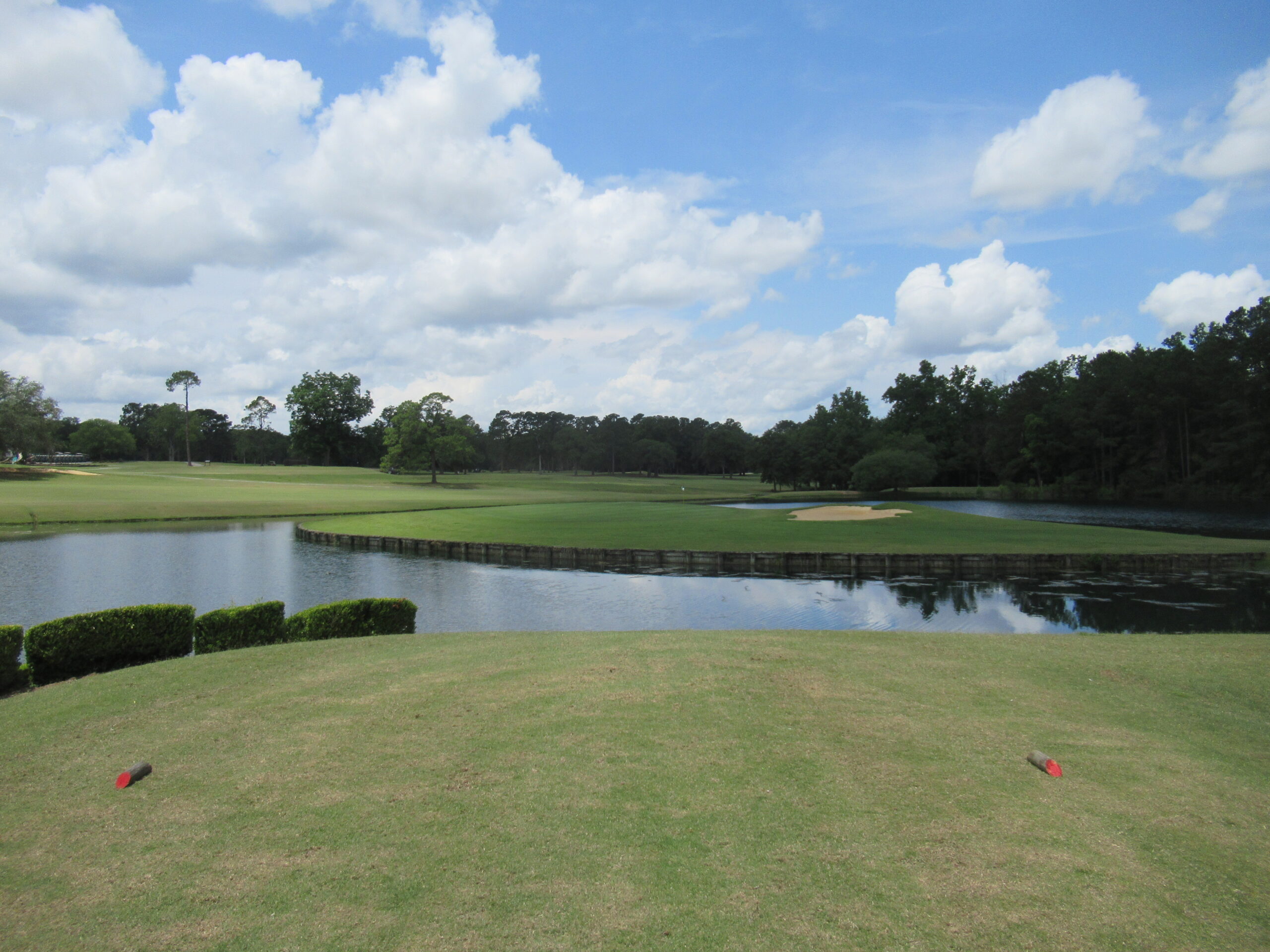
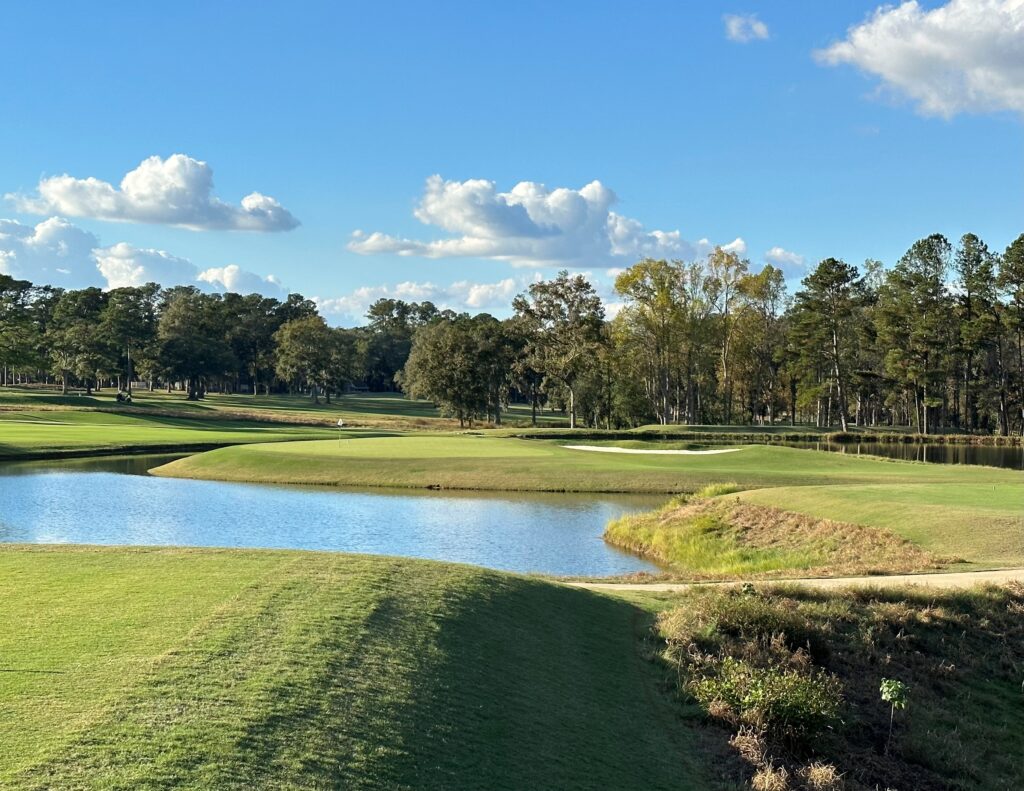
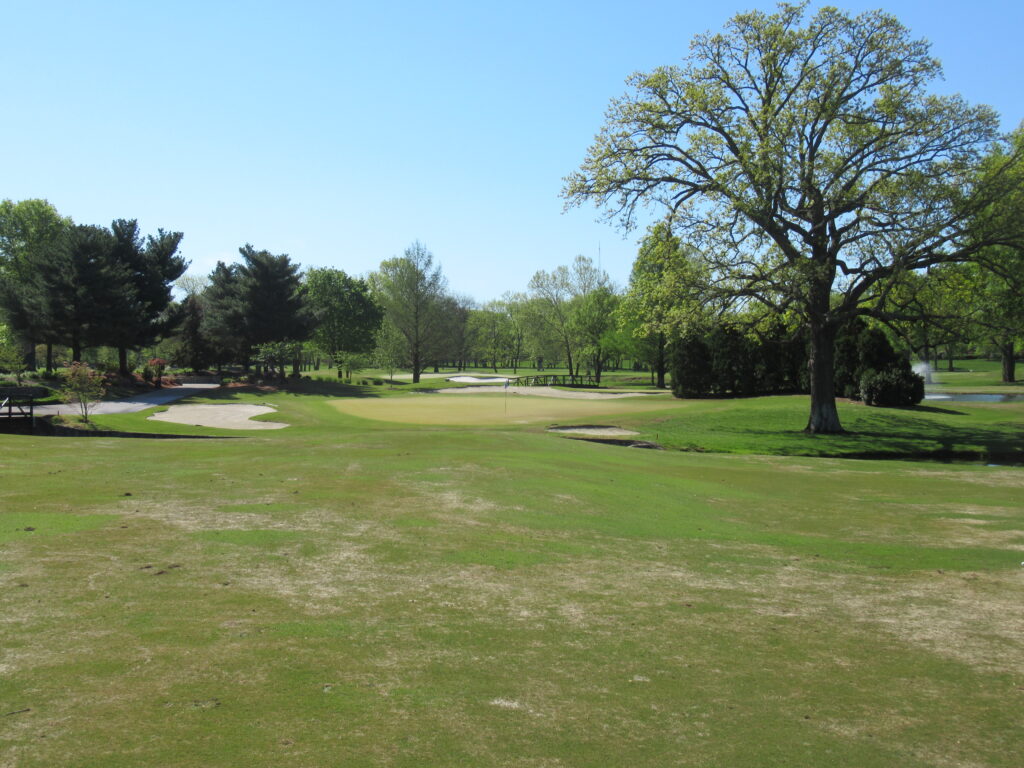
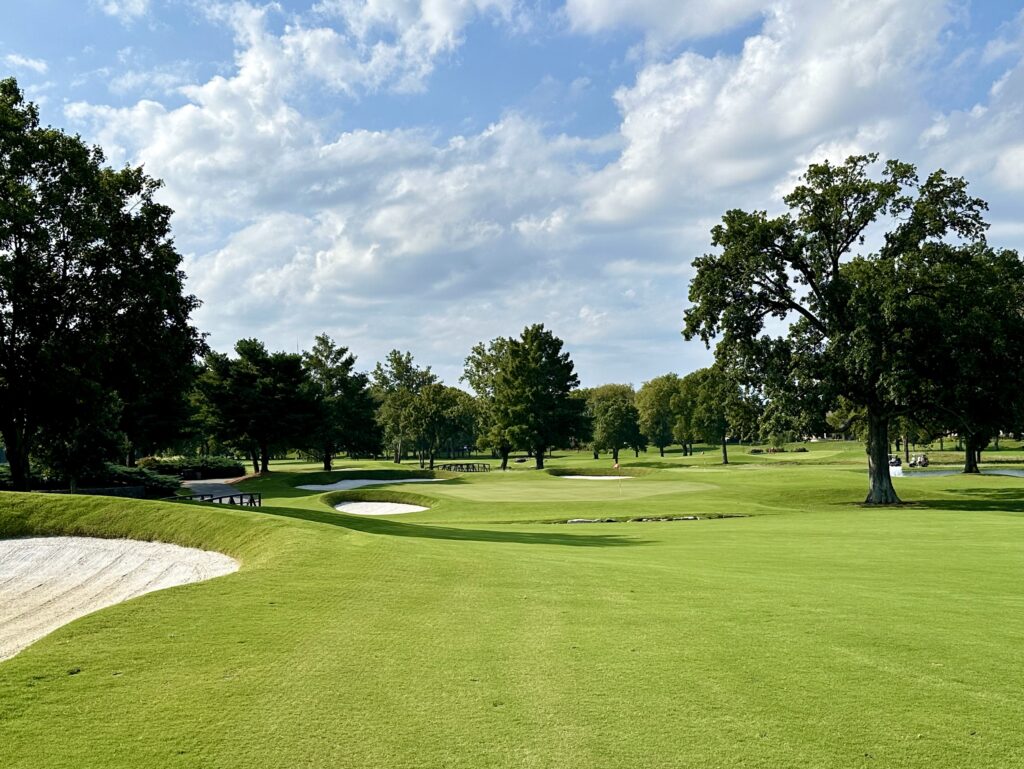
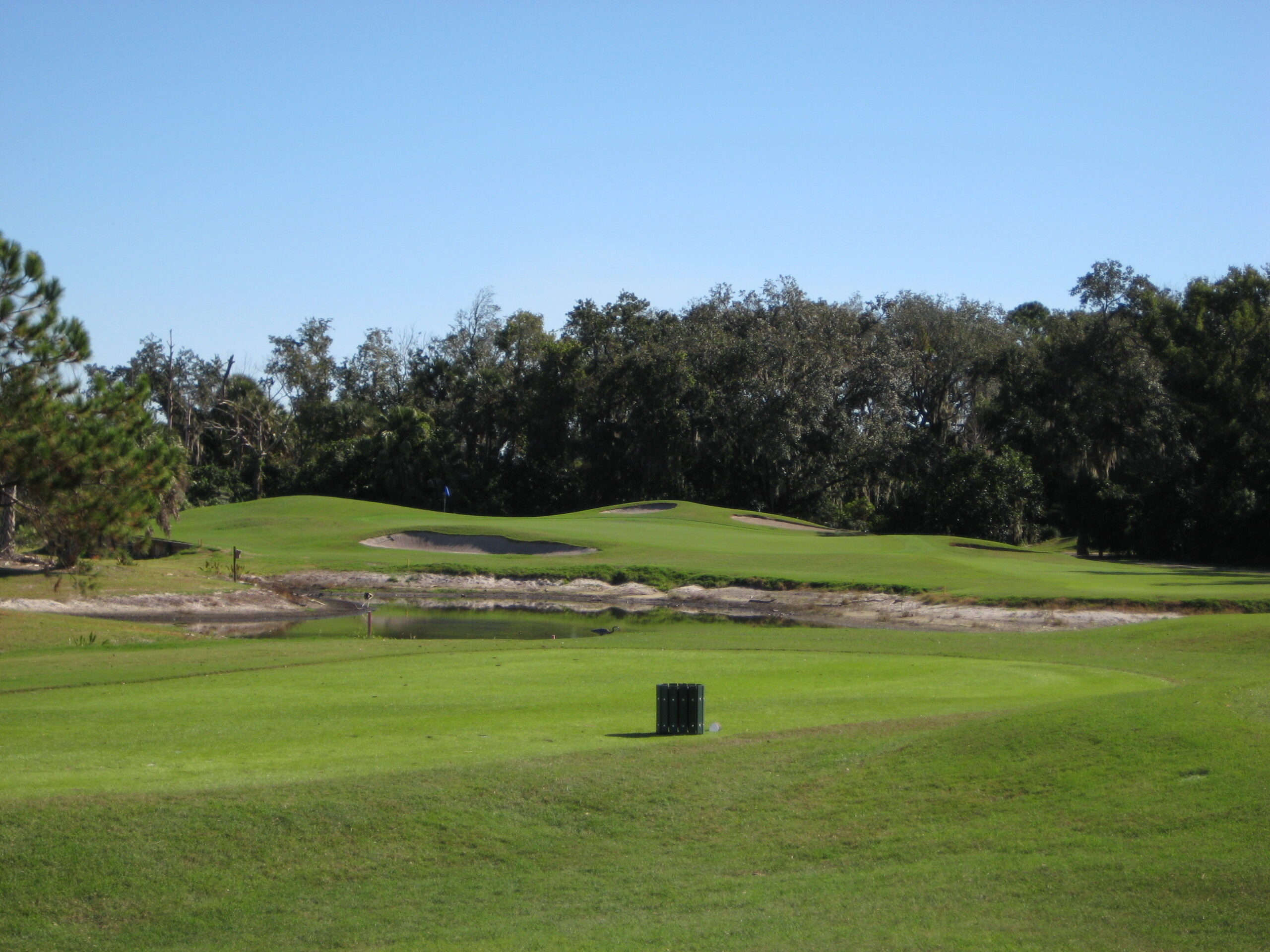
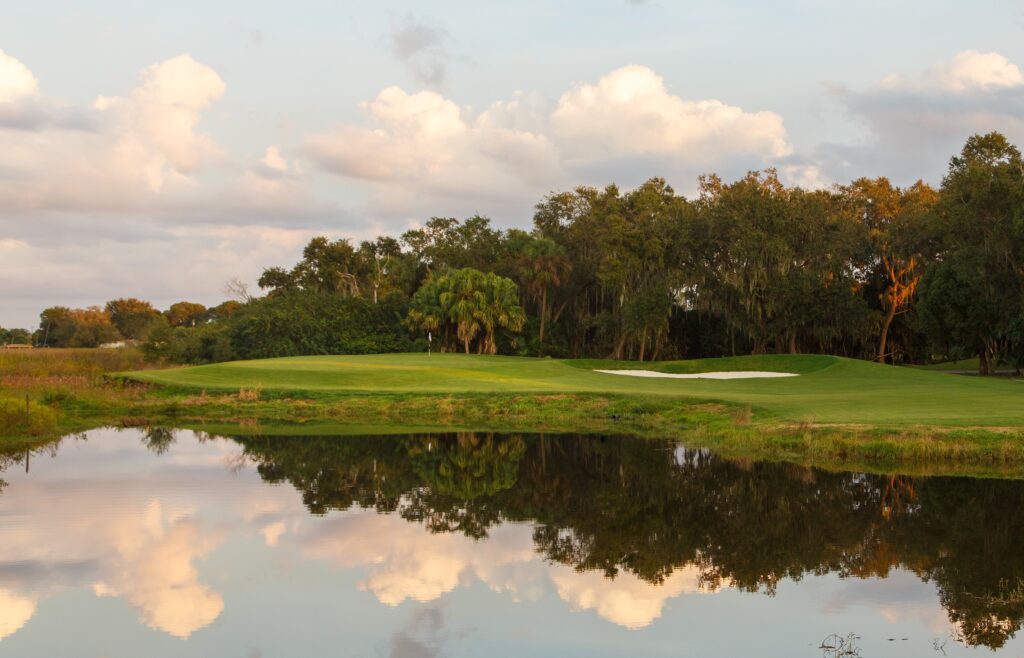
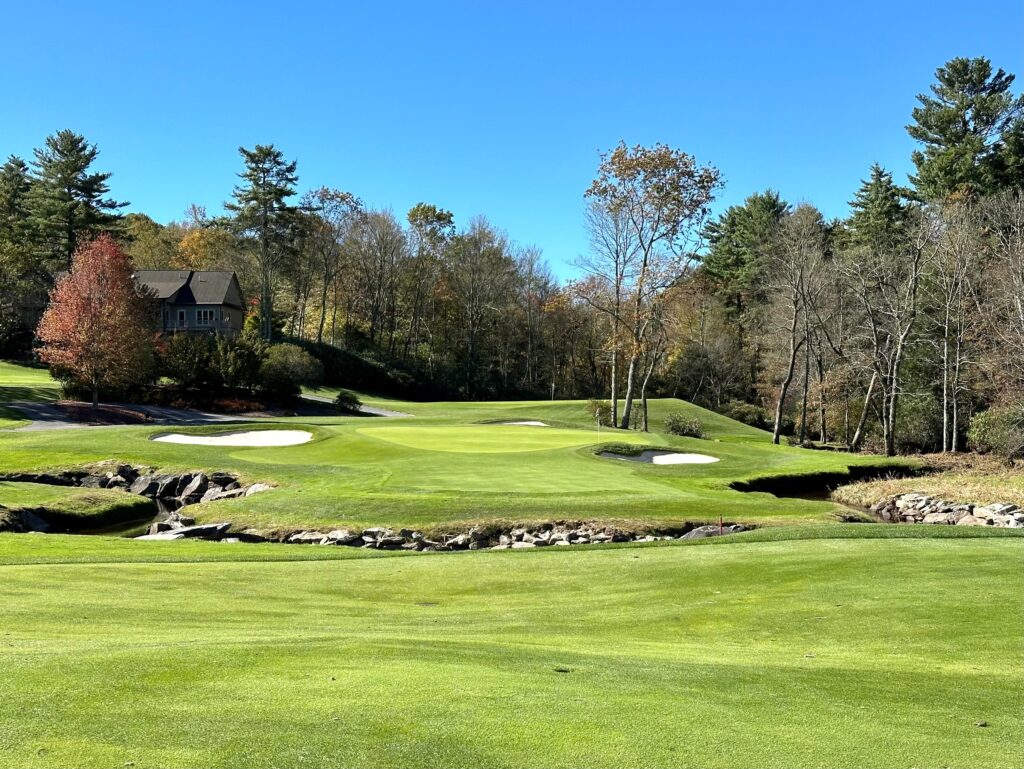
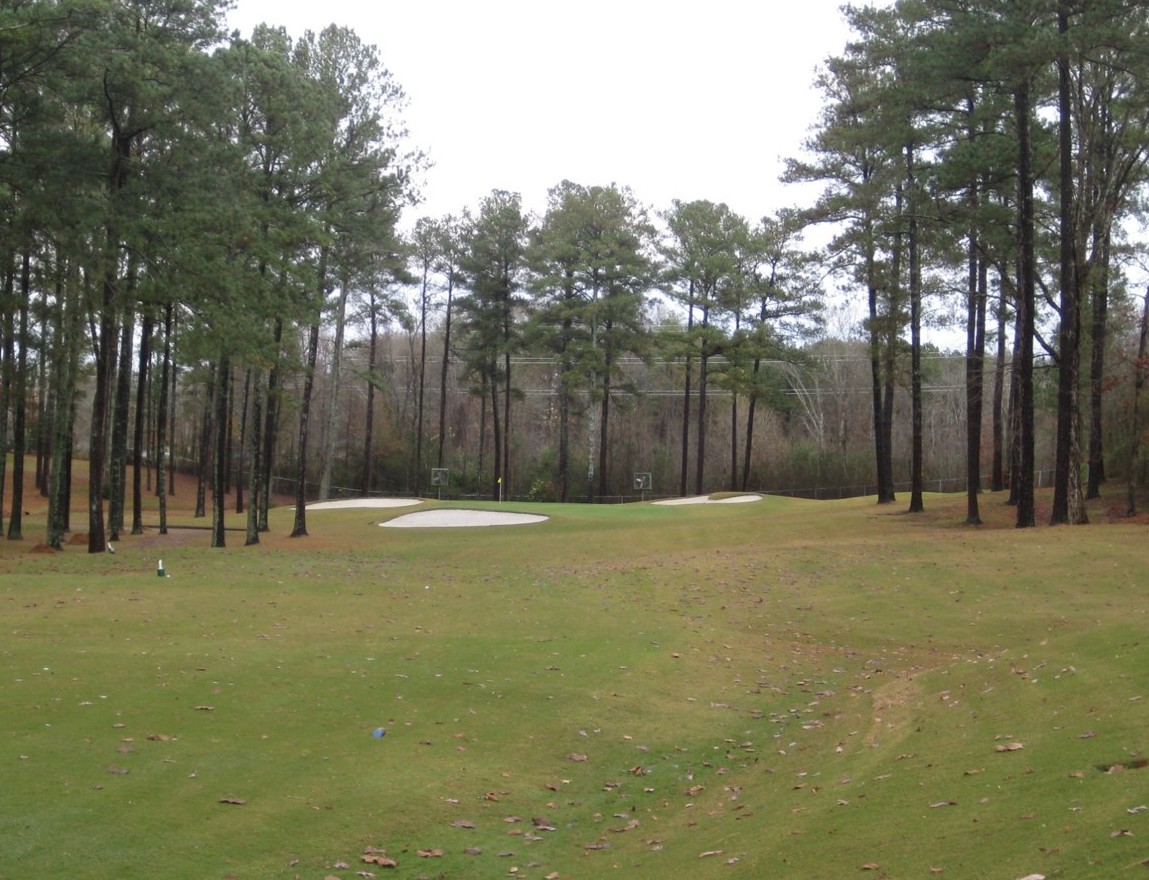
Not all renovations are created equal. Ours begin with researching the origins of the course and then studying the land to determine both its attributes and challenges. As the plans begin to form, the process is guided by historical considerations, logistical opportunity and feasible solutions. The results of our creativity range from subtle to astonishing.
Enjoy the selected before and after photos on our Transformations page as they offer a glimpse into our creativity and renovation capabilities. Bergin Golf Designs is the expert partner for maximizing value and creating lasting legacy through strategic golf course transformation.
Not all renovations are created equal. Ours begin with researching the origins of the course and then studying the land to determine both its attributes and challenges. As the plans begin to form, the process is guided by historical considerations, logistical opportunity and feasible solutions. The results of our creativity range from subtle to astonishing.
Enjoy the selected before and after photos on our Transformations page as they offer a glimpse into our creativity and renovation capabilities. Bergin Golf Designs is the expert partner for maximizing value and creating lasting legacy through strategic golf course transformation.
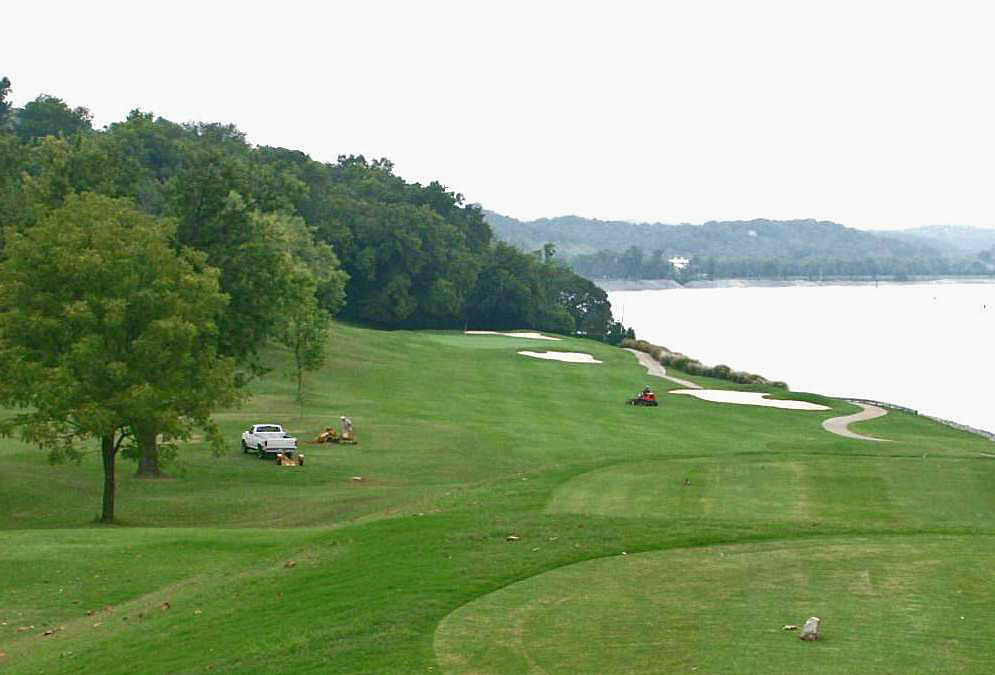
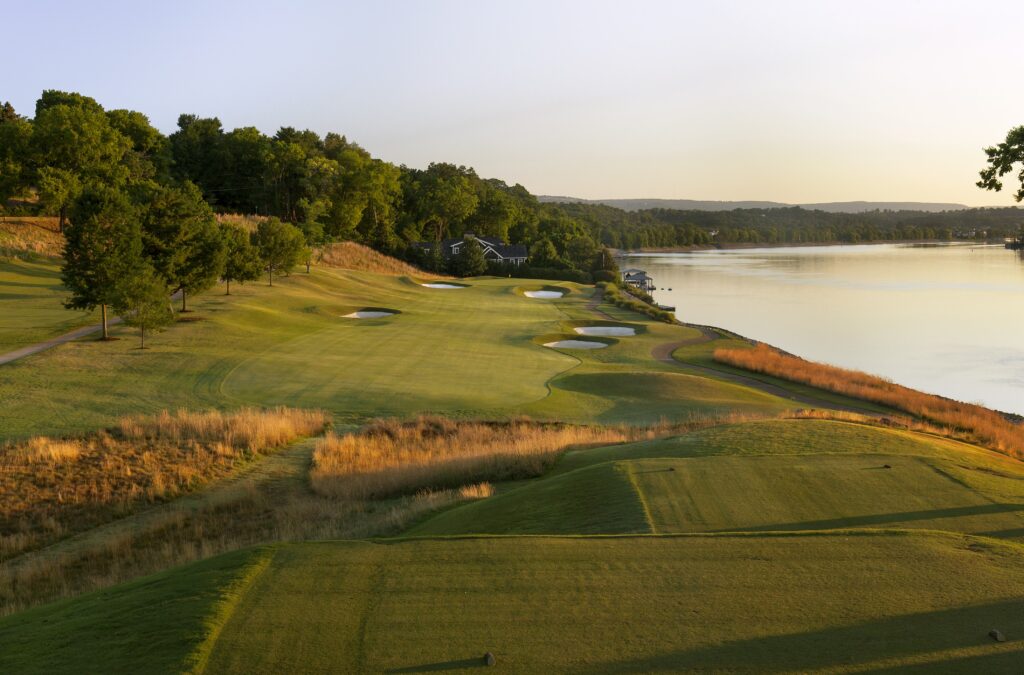
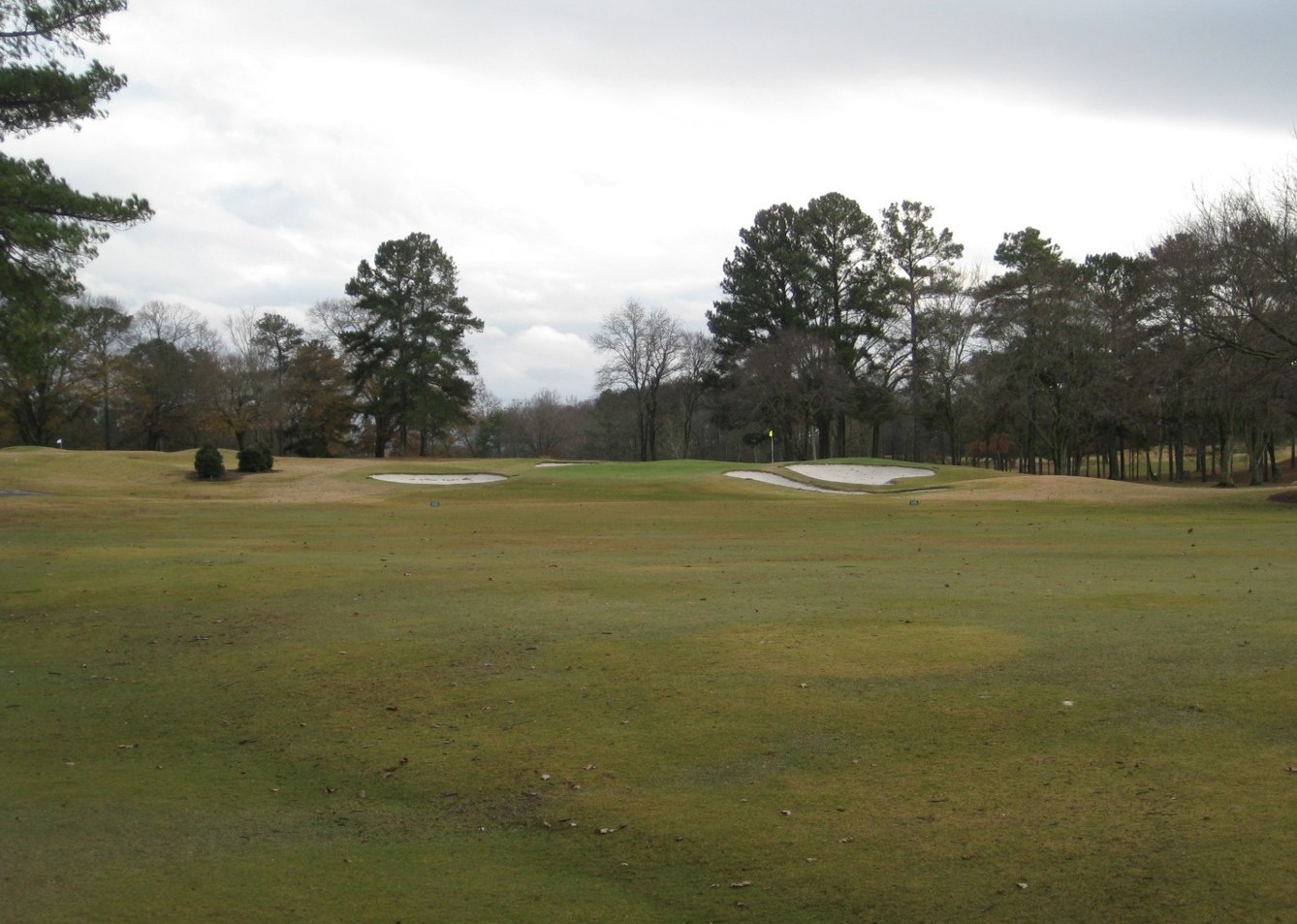
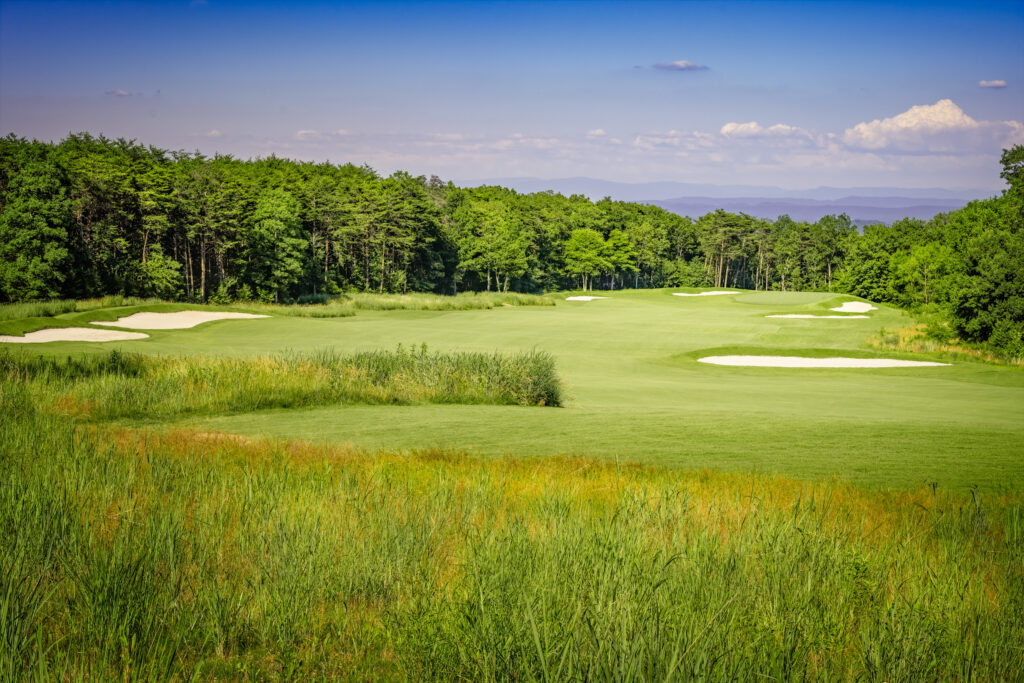
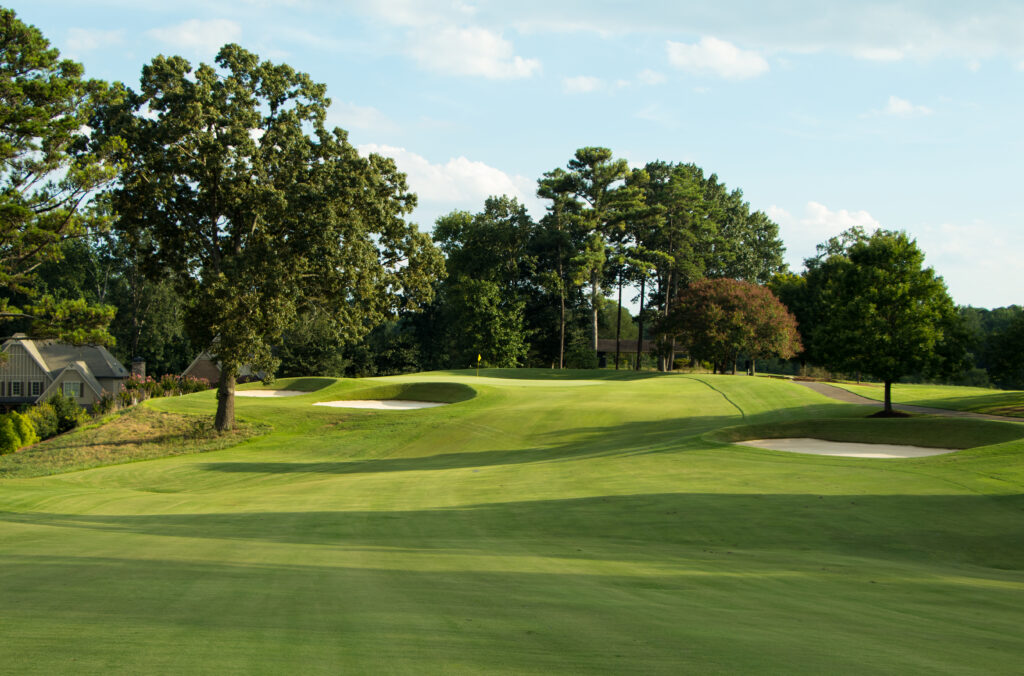
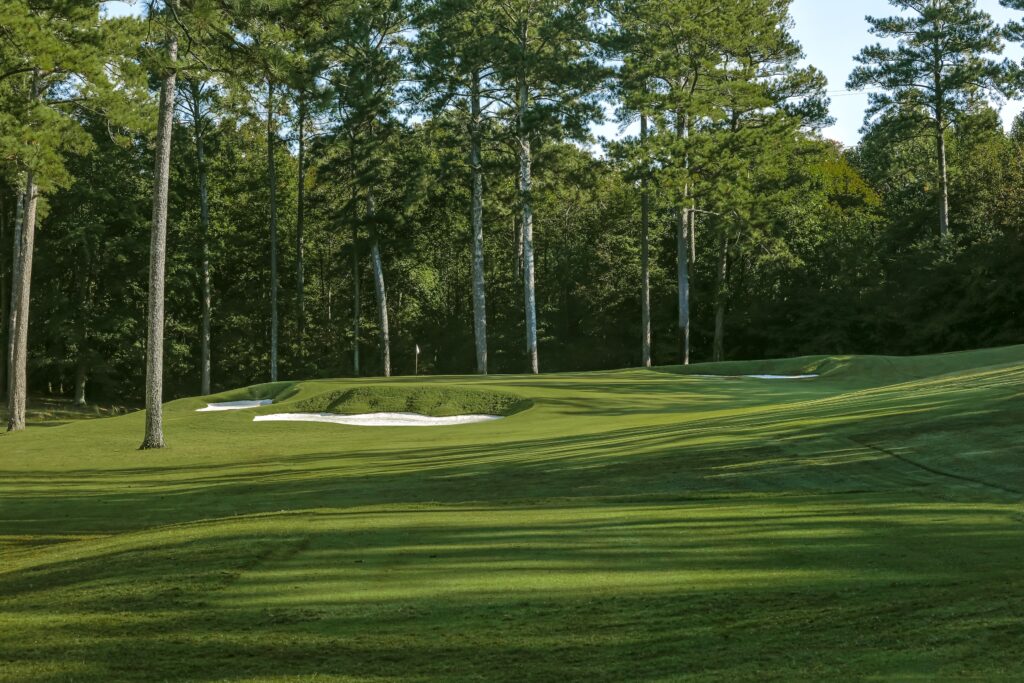
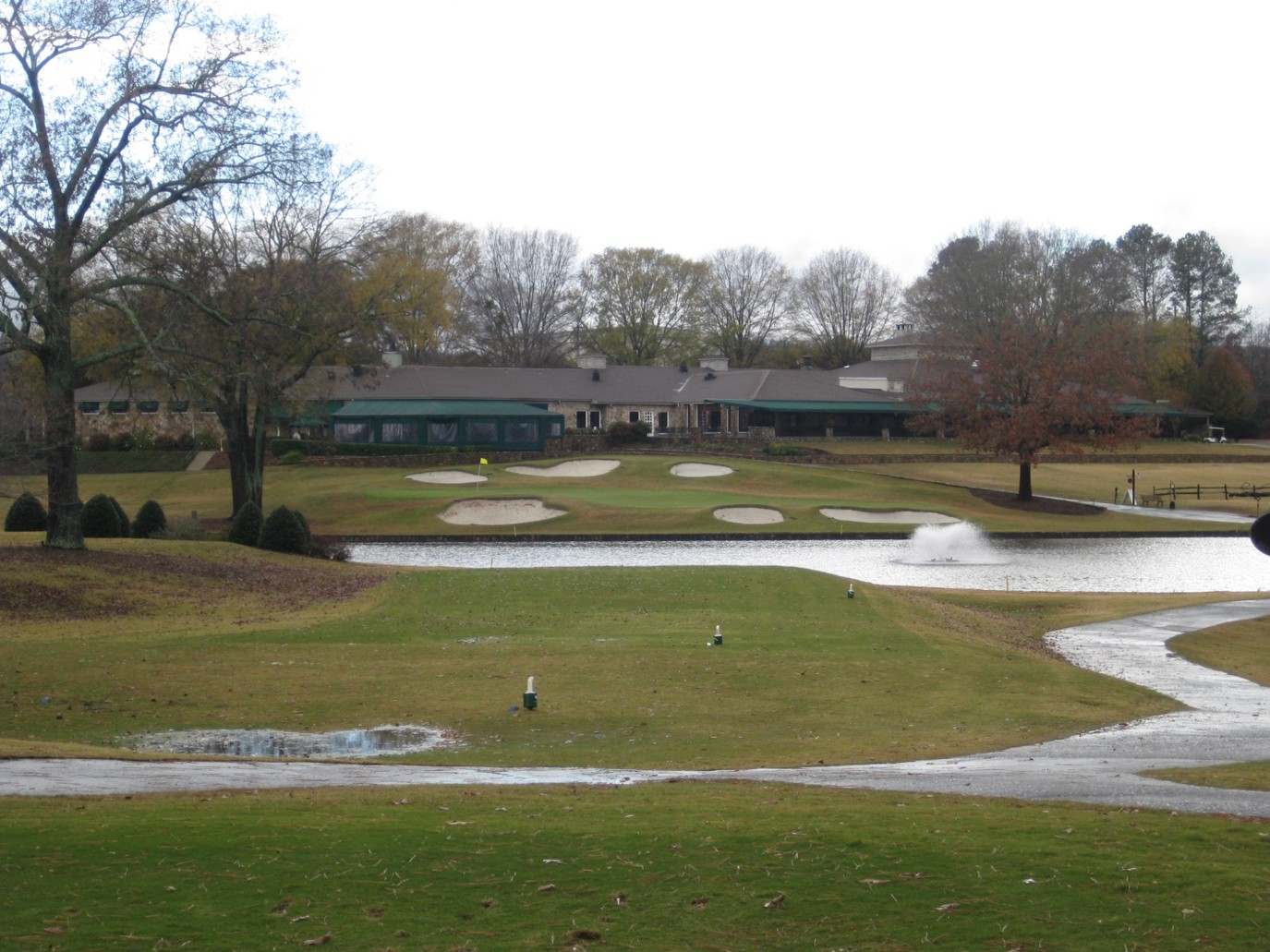
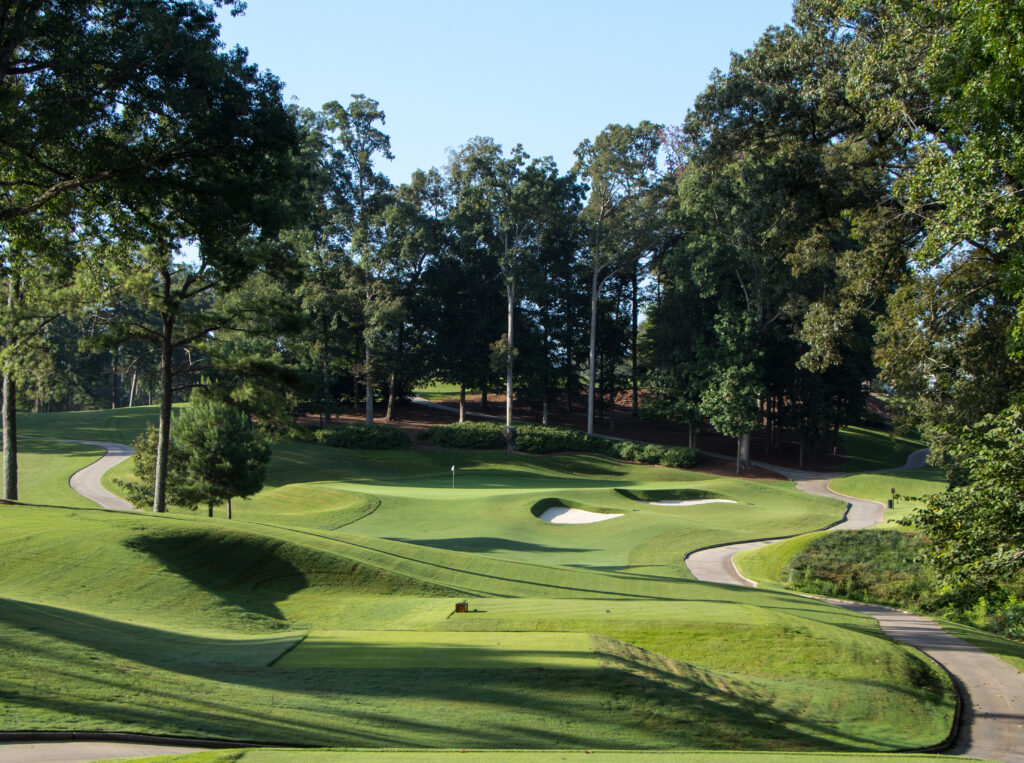
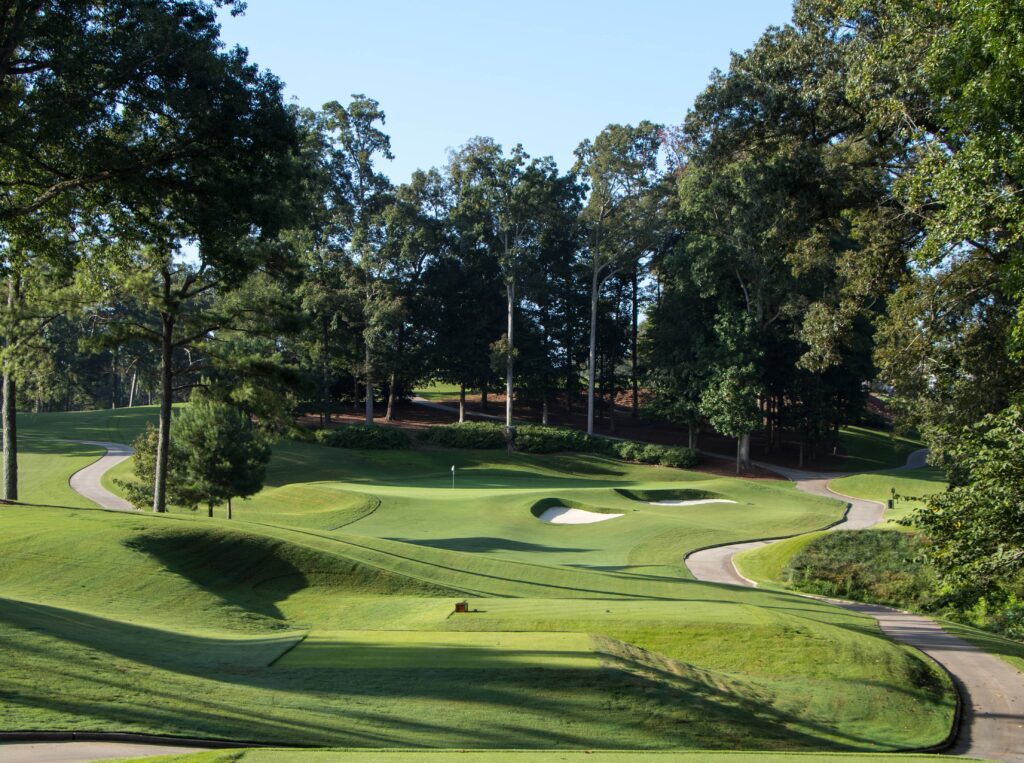
Bringing the focus to the golf hole was a terrific result in the transformation of the opening hole at Chattanooga. The original lacked aesthetic balance or strategic interest.
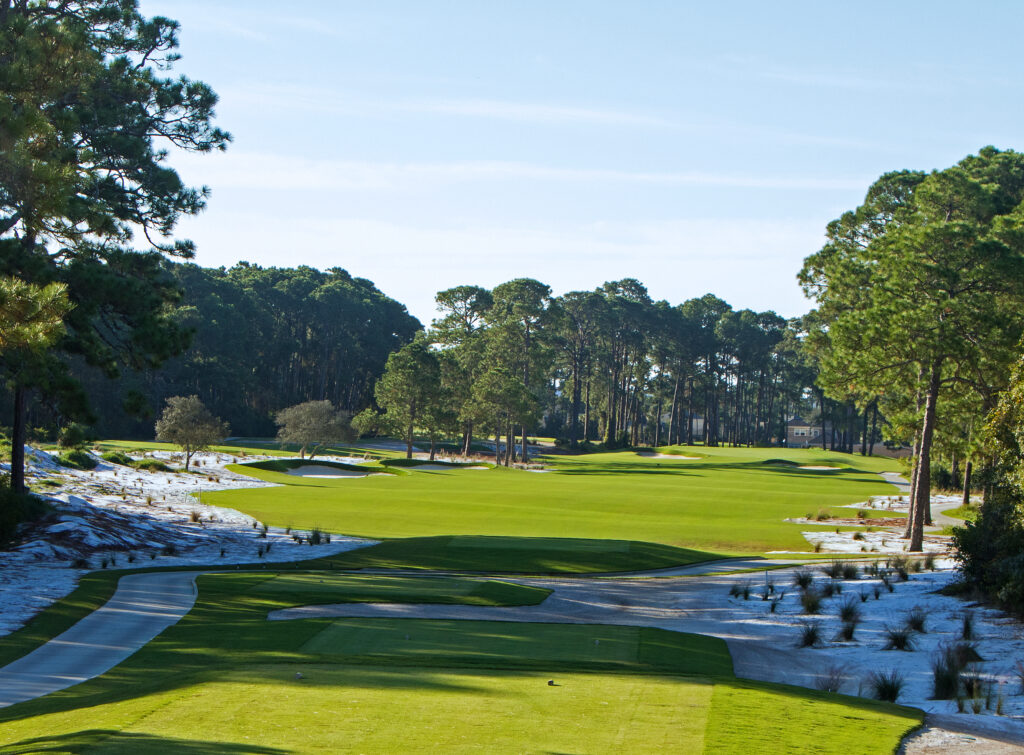
Santa Rosa G&BC - 1
What a great introduction to our work at Santa Rosa Golf & Beach Club. Natural sand abounds under the surface of this property and it was literally turned over to create the new course.
Minnesota Valley CC - 2
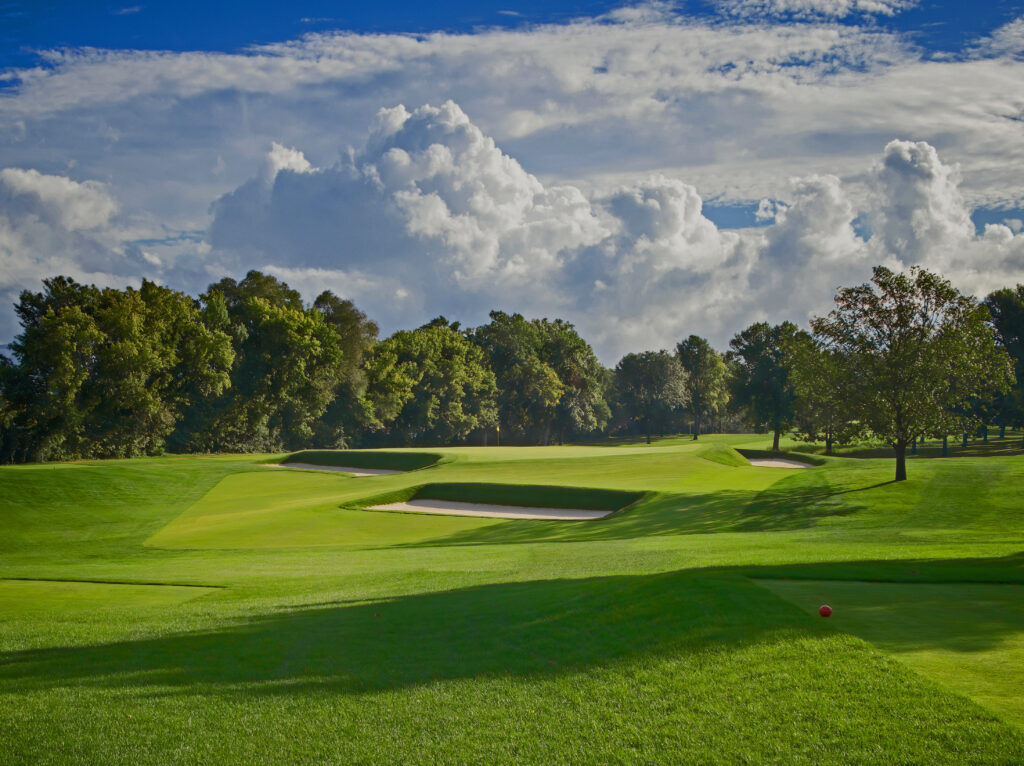
No template hole says “Raynor” more than a Redan. The original second hole at Minnesota Valley lacked those characteristics, yet the land was perfectly suited for a new version of The Redan. By rotating the green to the right, appropriate length was attained for this hole and the new “Punch Bowl” third hole.
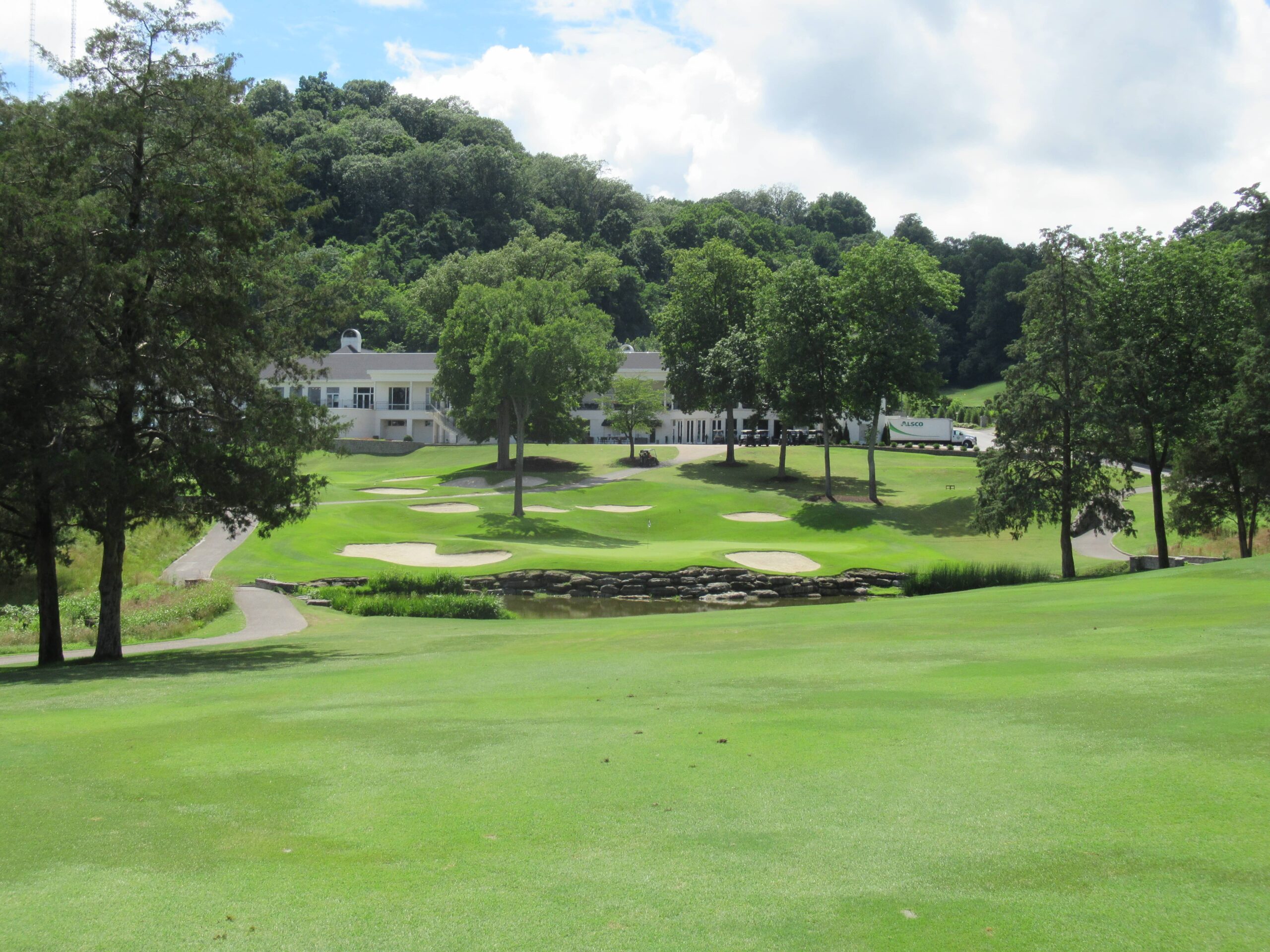
Richland CC - 18
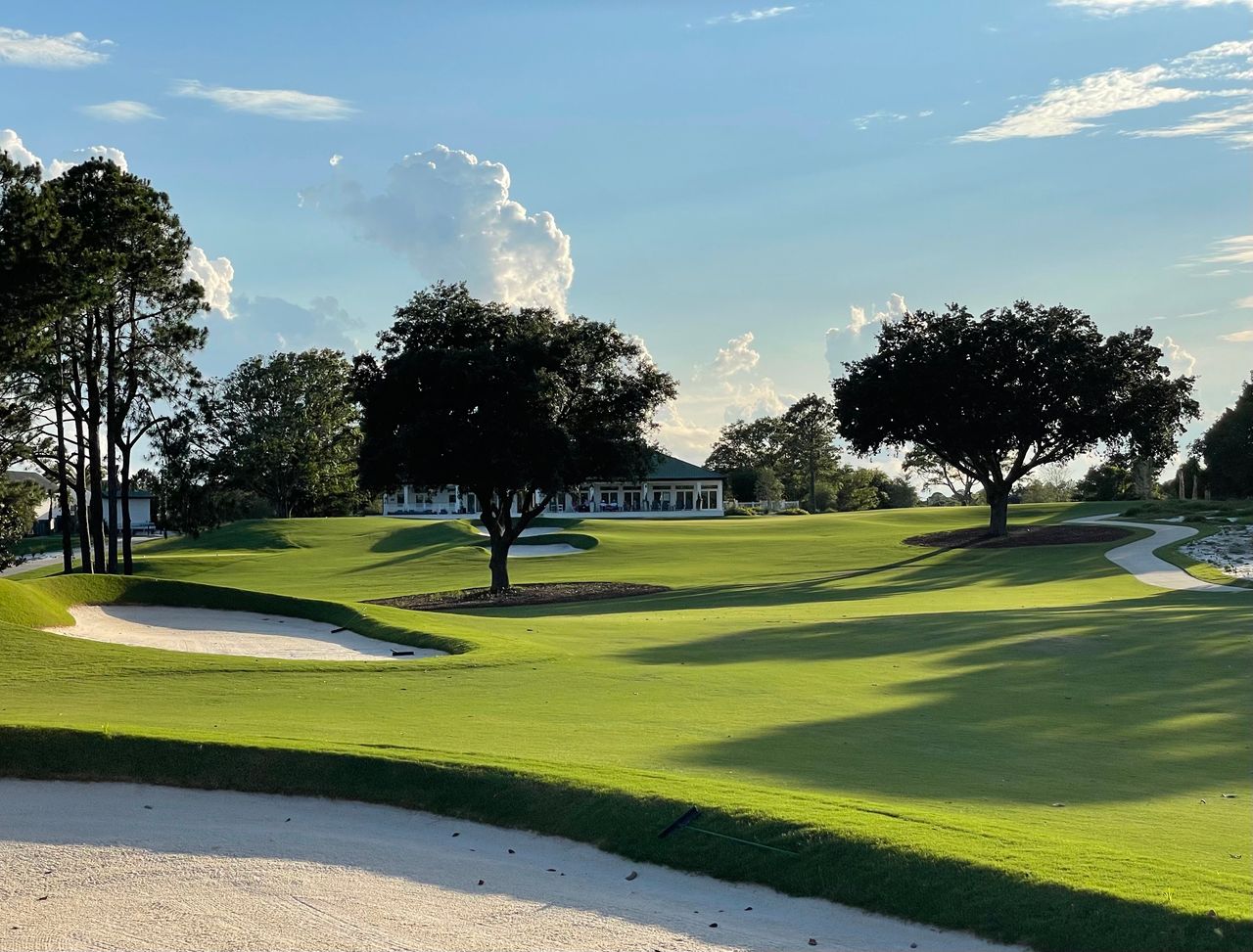
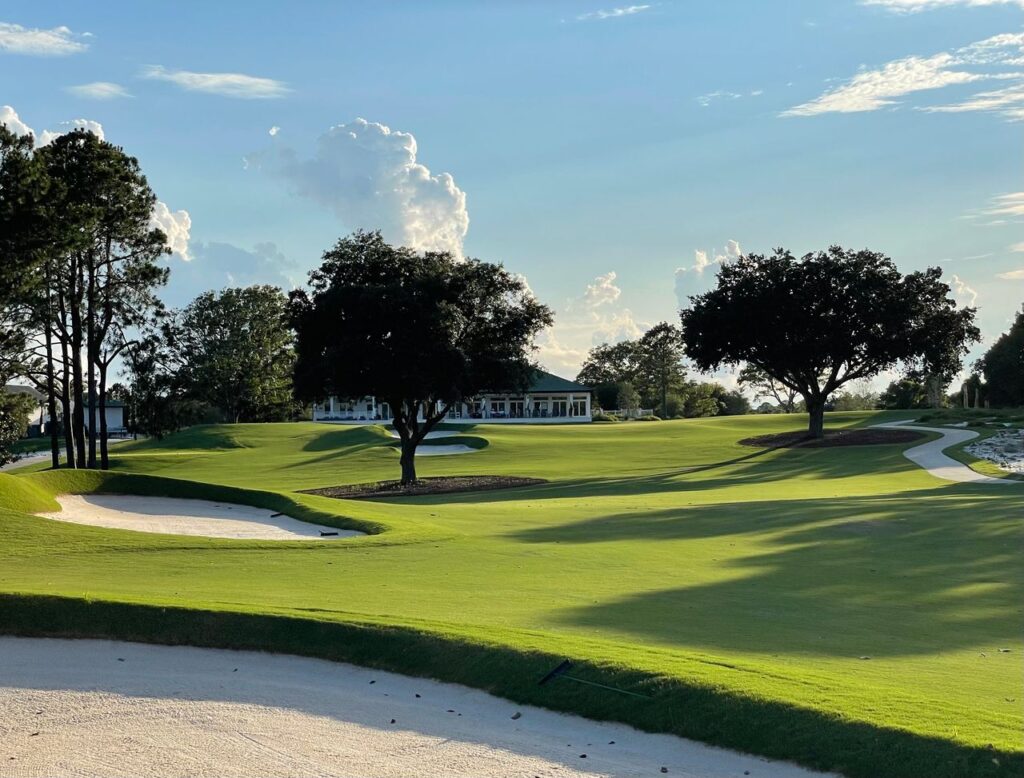
Originally the 9th hole, the new finishing hole offers a challenging approach and a fabulous view of the clubhouse. Tree removal and a new routing add to a fabulous vista across the course from the back area of the clubhouse.
Pinetree CC - 12
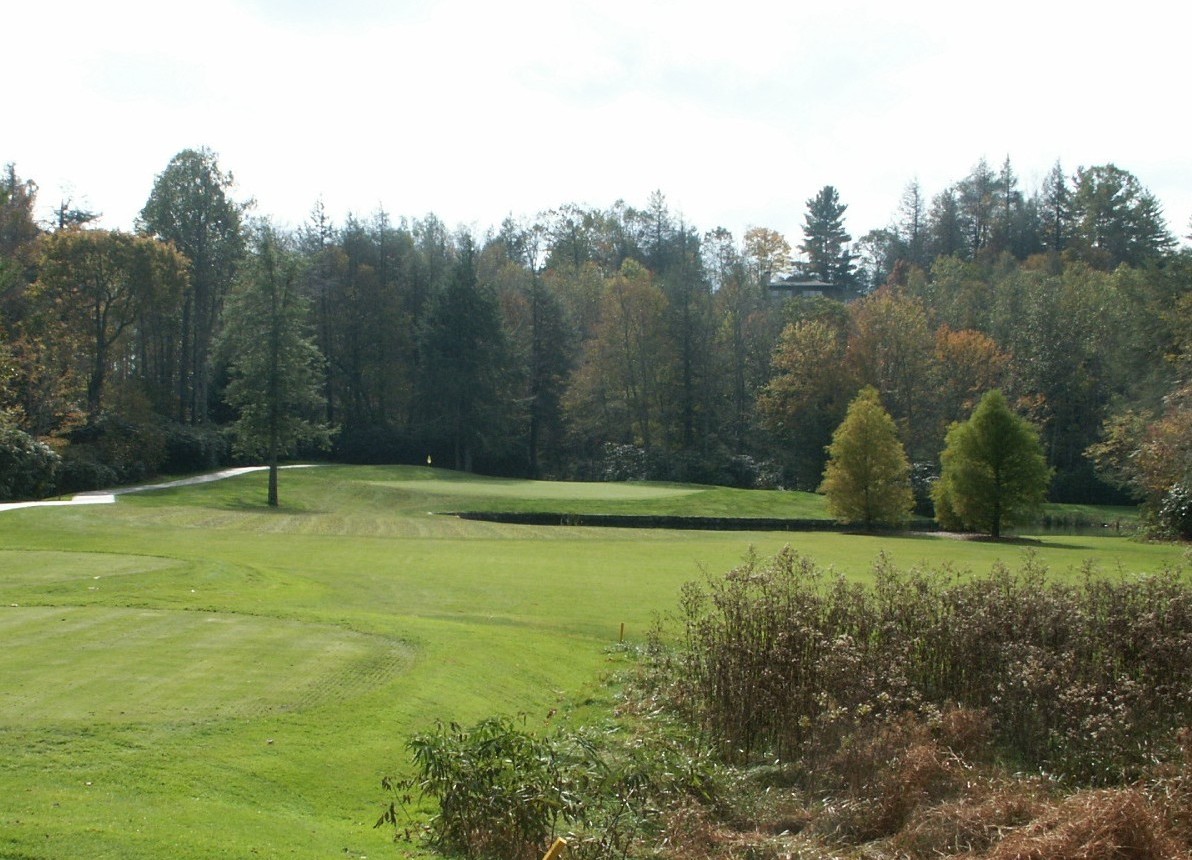
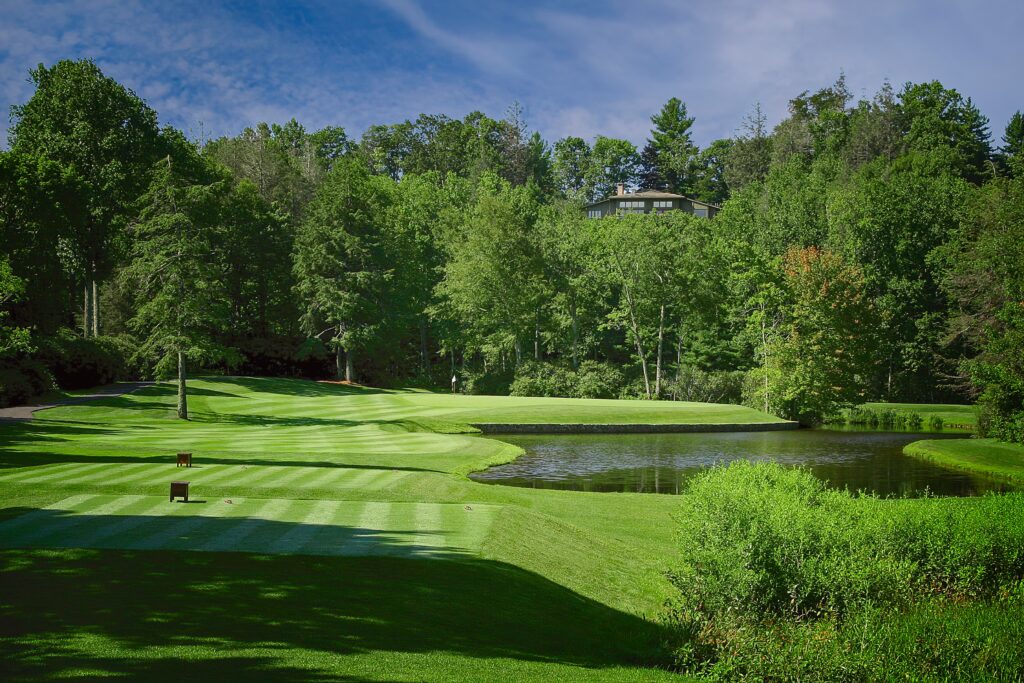
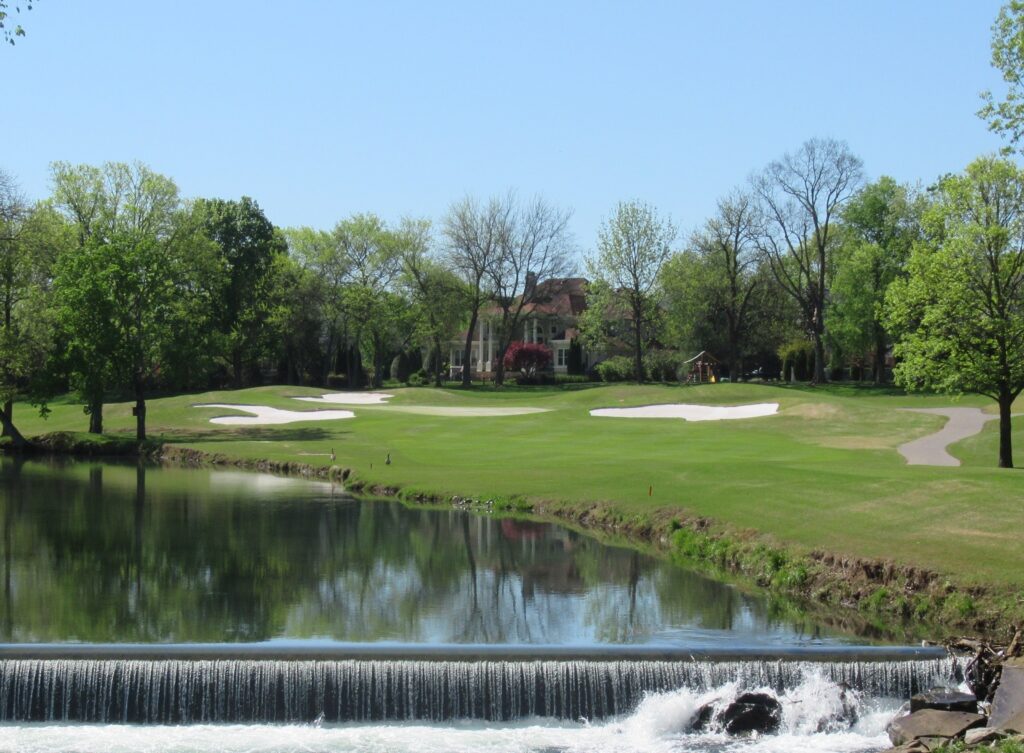
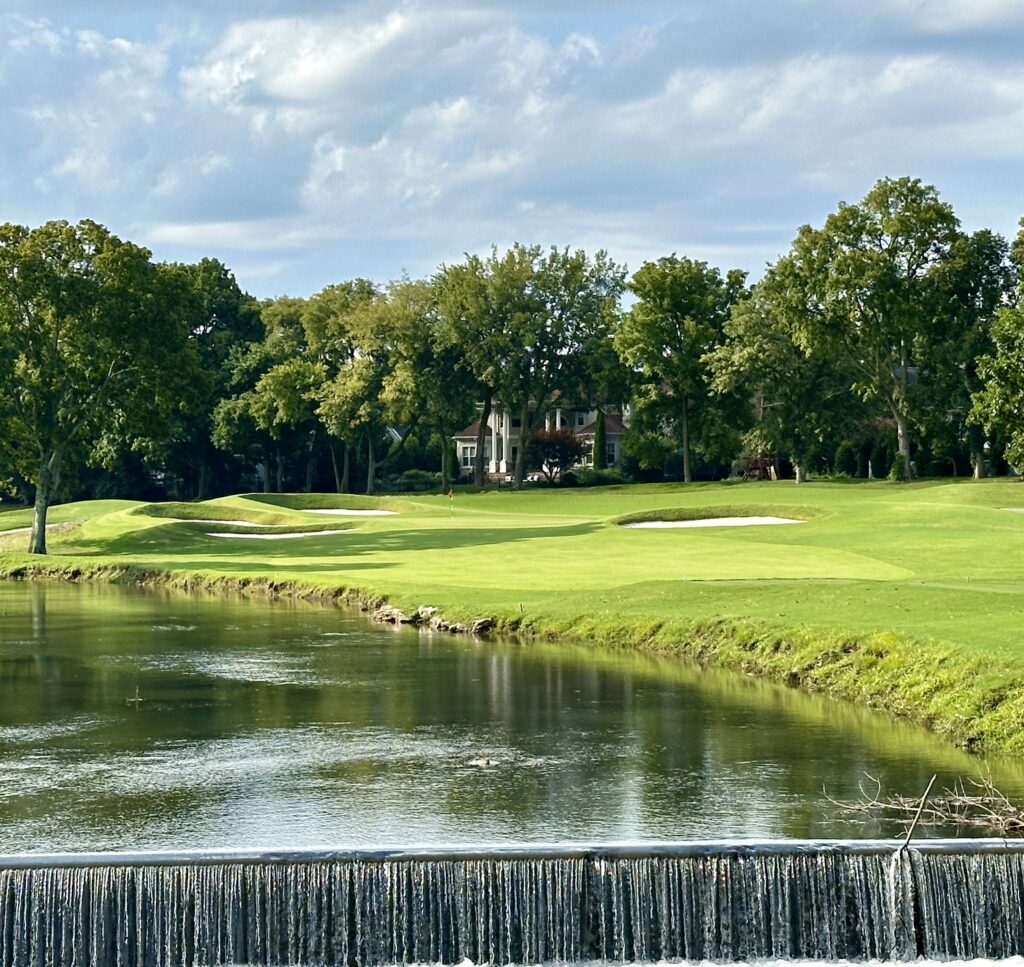
There may be no better example of a true transformation than the 12th hole at Pinetree CC. The tees rotated right while the green dropped and shifted left. The water feature remained untouched, yet became a significant visual aspect of the experience.
Valdosta CC - 9
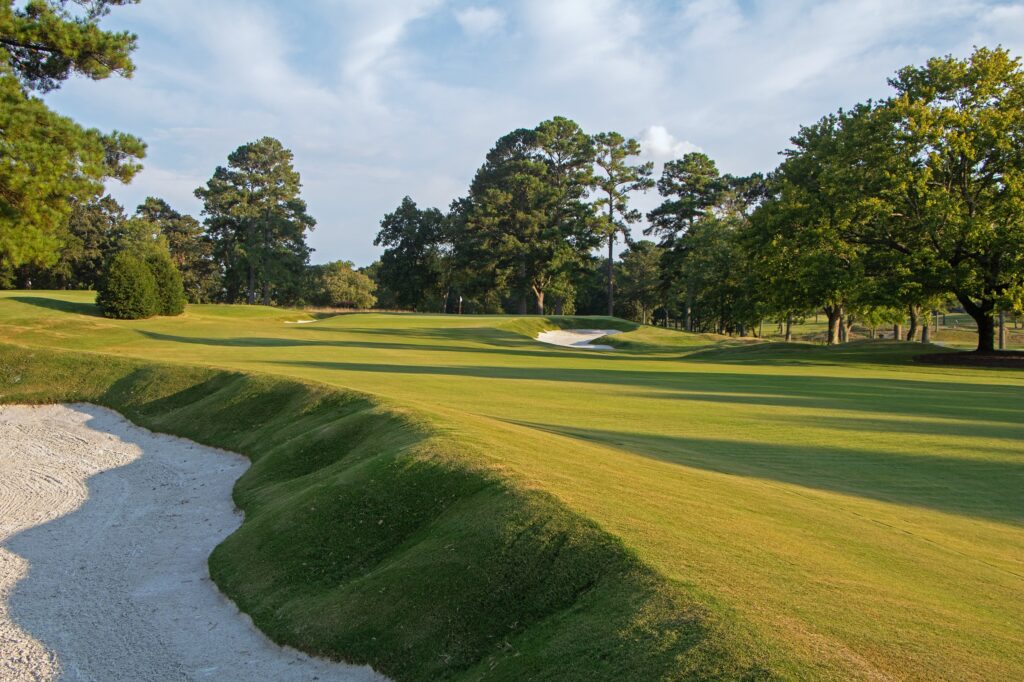
With origins dating back to 1917 on this site, Valdosta CC needed its golf course to more closely match the design style of its era. Grass faced bunkering with thoughtful positioning has been part of that plan. The second shot on the par five ninth requires great thought and awareness of the hole location to be successful.
Oaks CC - 6
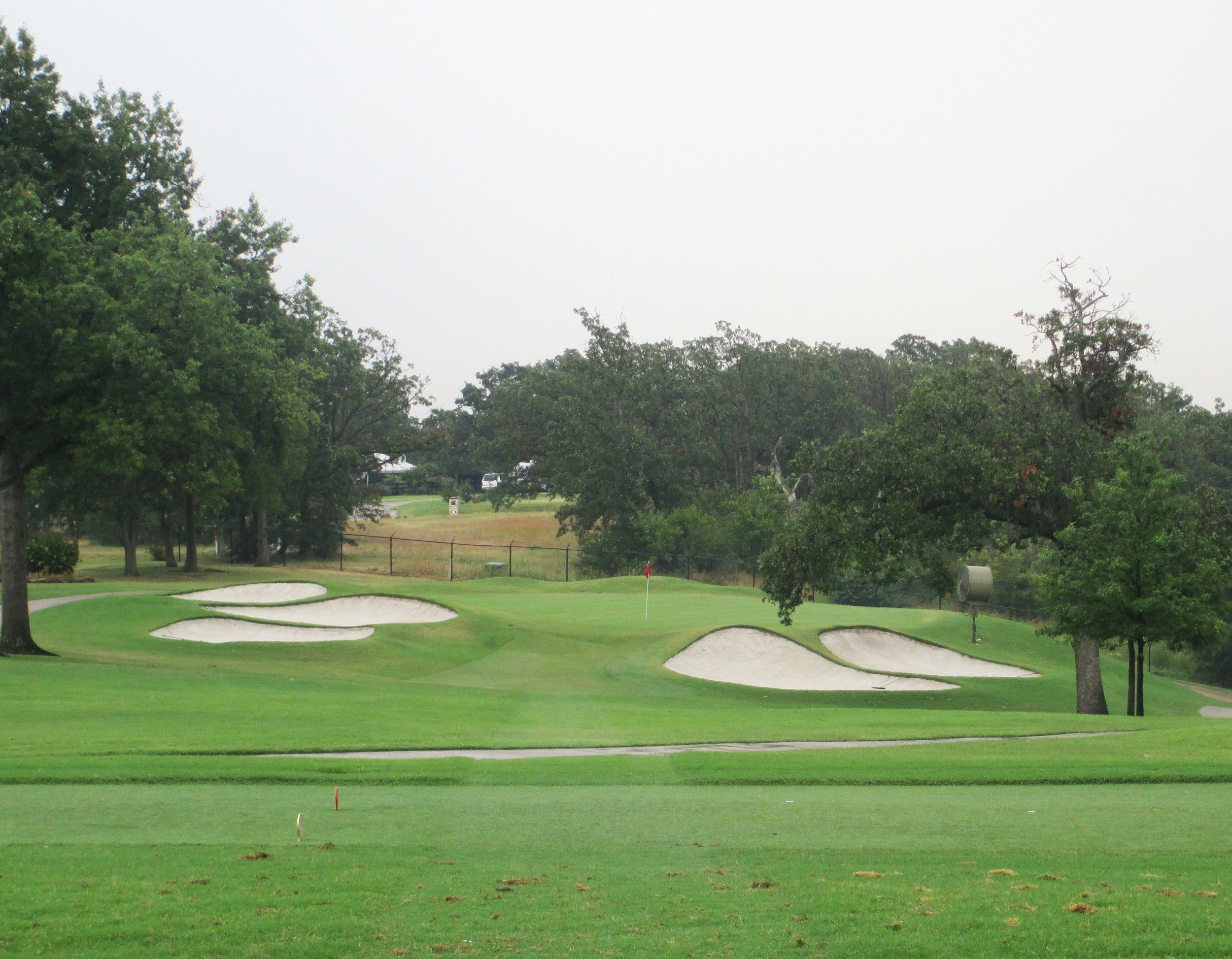
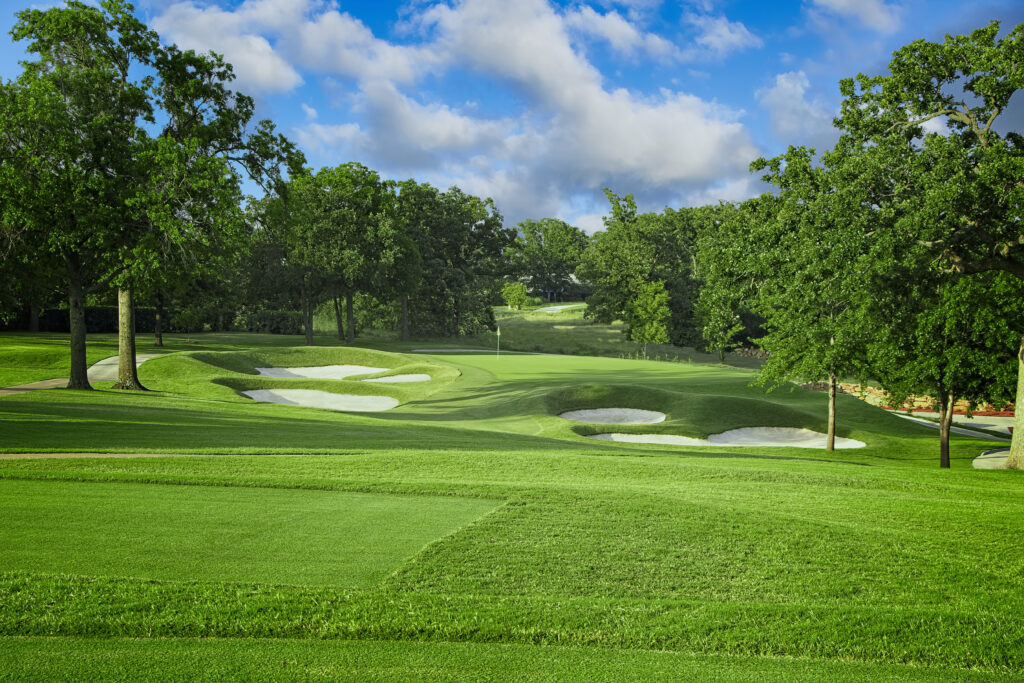
At first glance, this 130-yard par three might look like a simple pushover, but let those Oklahoma breezes get up and it’s another story. Well bunkered and demanding precision, the 6th hole at Oaks CC is a hole you just look forward to playing.
Chickasaw CC - 12
Although Chickasaw sits on a diminutive site, we were able to open it up and create the feeling and character of its 1922 origins. The 12th hole green complex was modeled after the original William Langford with one bunker exception.
Marietta CC - 6
Bold bunkering shows off the gradual rise of the 6th fairway. This is truly a par four and a half, but it’s shallow green sits just past the center bunker and requires proper distance control to hold the putting surface.
The Landings - 7
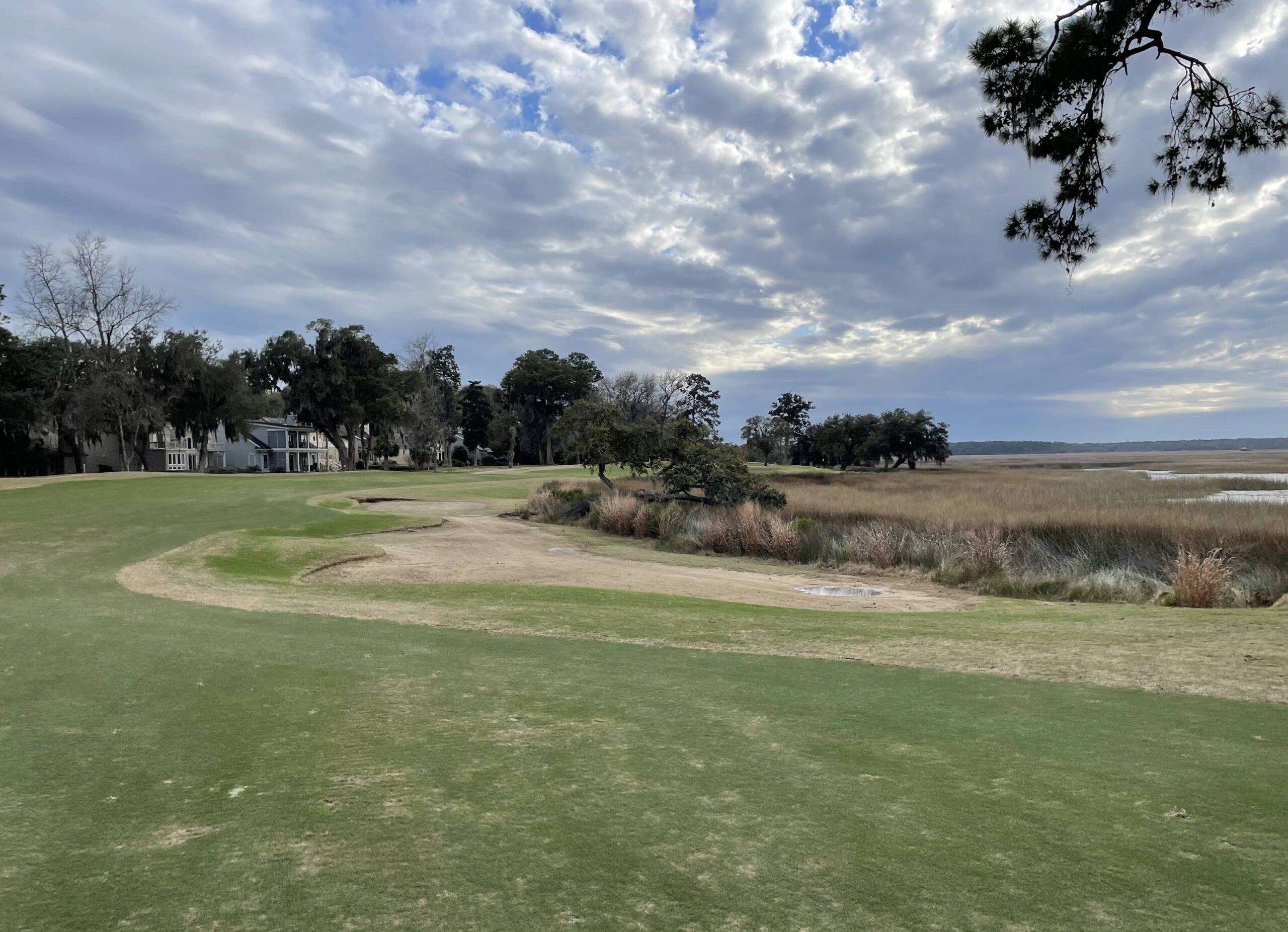
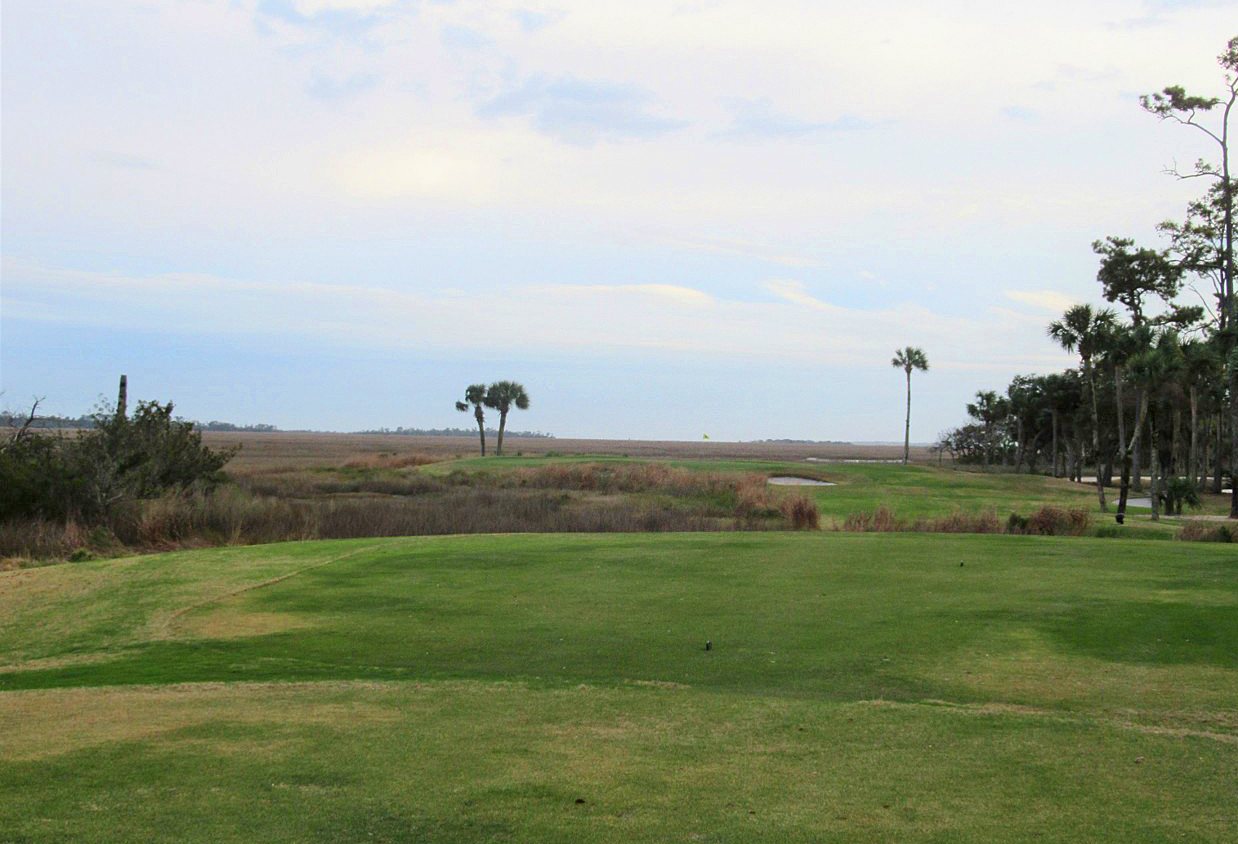
Blending golf and the environment is one of the joys of golf course architecture. The par five 7th at The Landings – Palmetto is a fabulous example of how fortunate we are to play in fabulous locations.
McLemore - 8
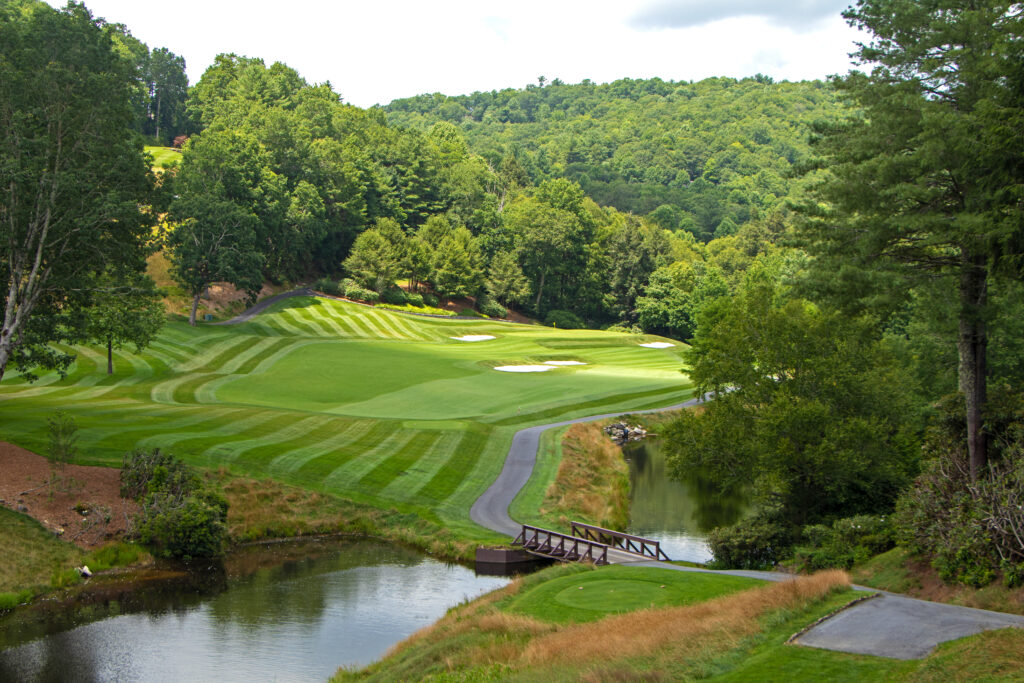
The early holes on the Highlands Course wind through canyons and feature significant elevation changes, requiring precise play. Climbing to the upper plateau, it is a welcome shift to encounter the sizeable par four eighth where some power golf can be excercised.
Dunwoody CC - 18
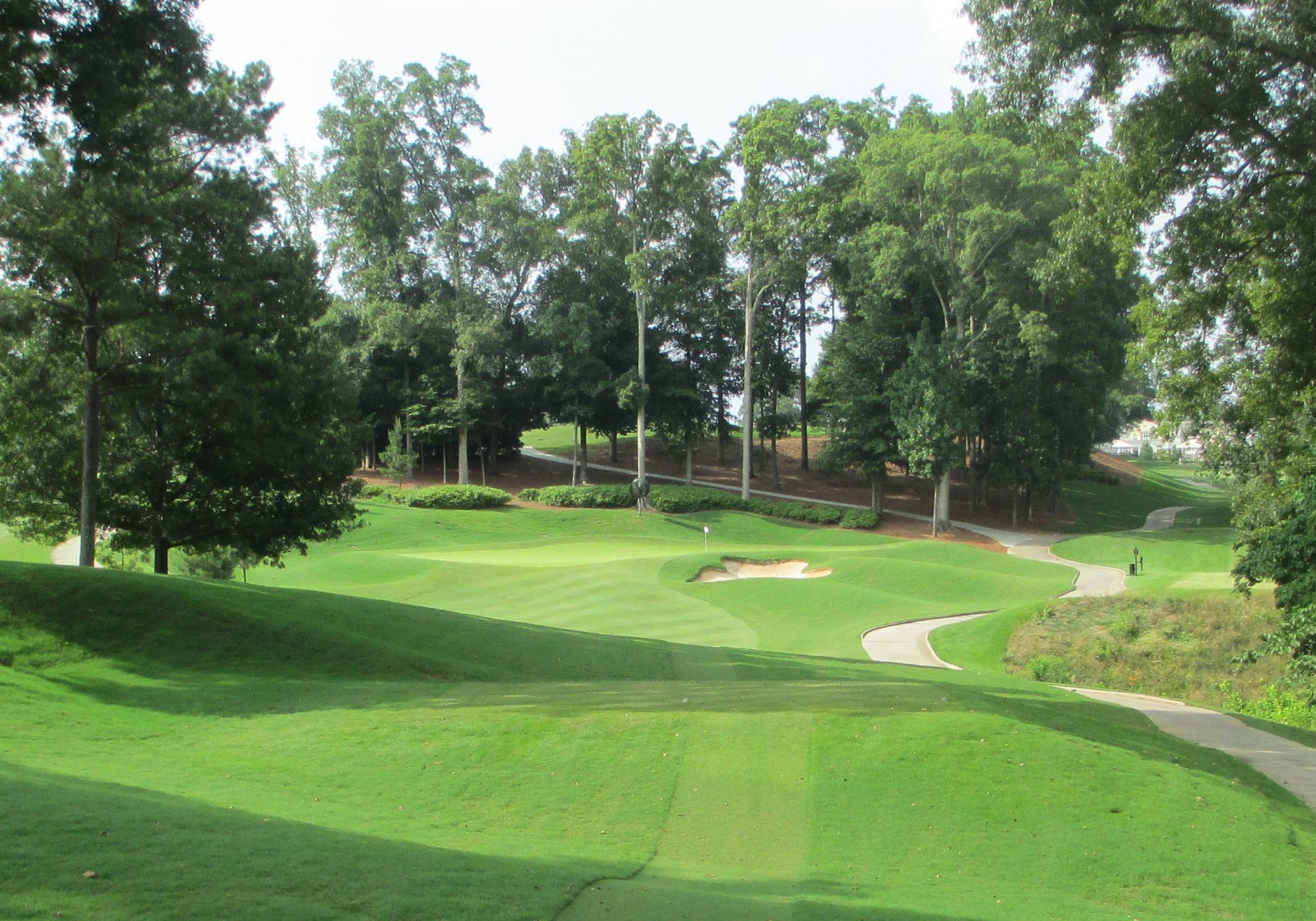
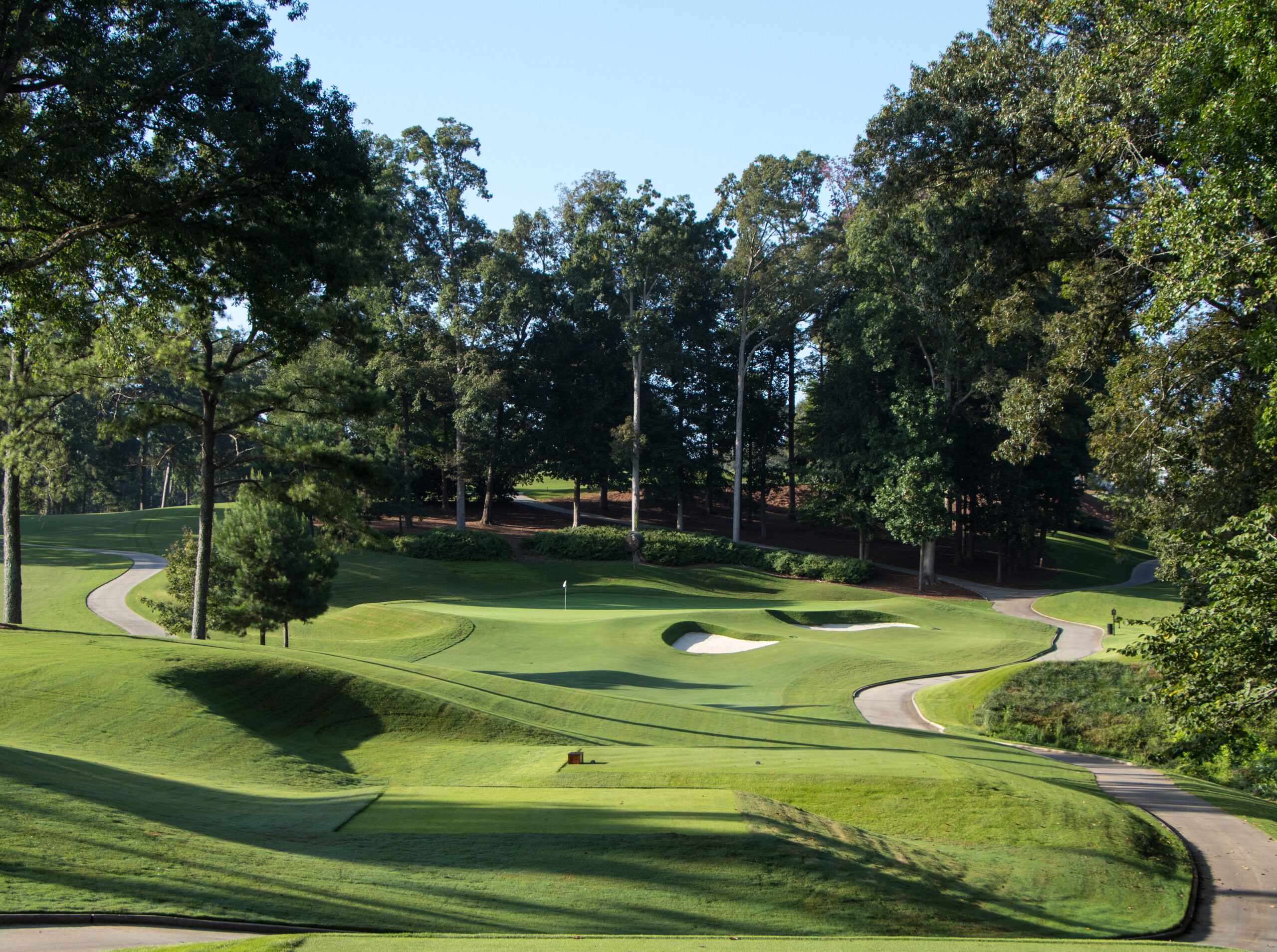
Though our 2013 renovation at Dunwoody CC addressed only bunkering and greens modification, the feel of the course changed dramatically. Sharp bunker edges and putting surfaces that present more hole locations gave a small project a big result.
Sapphire Valley - 18
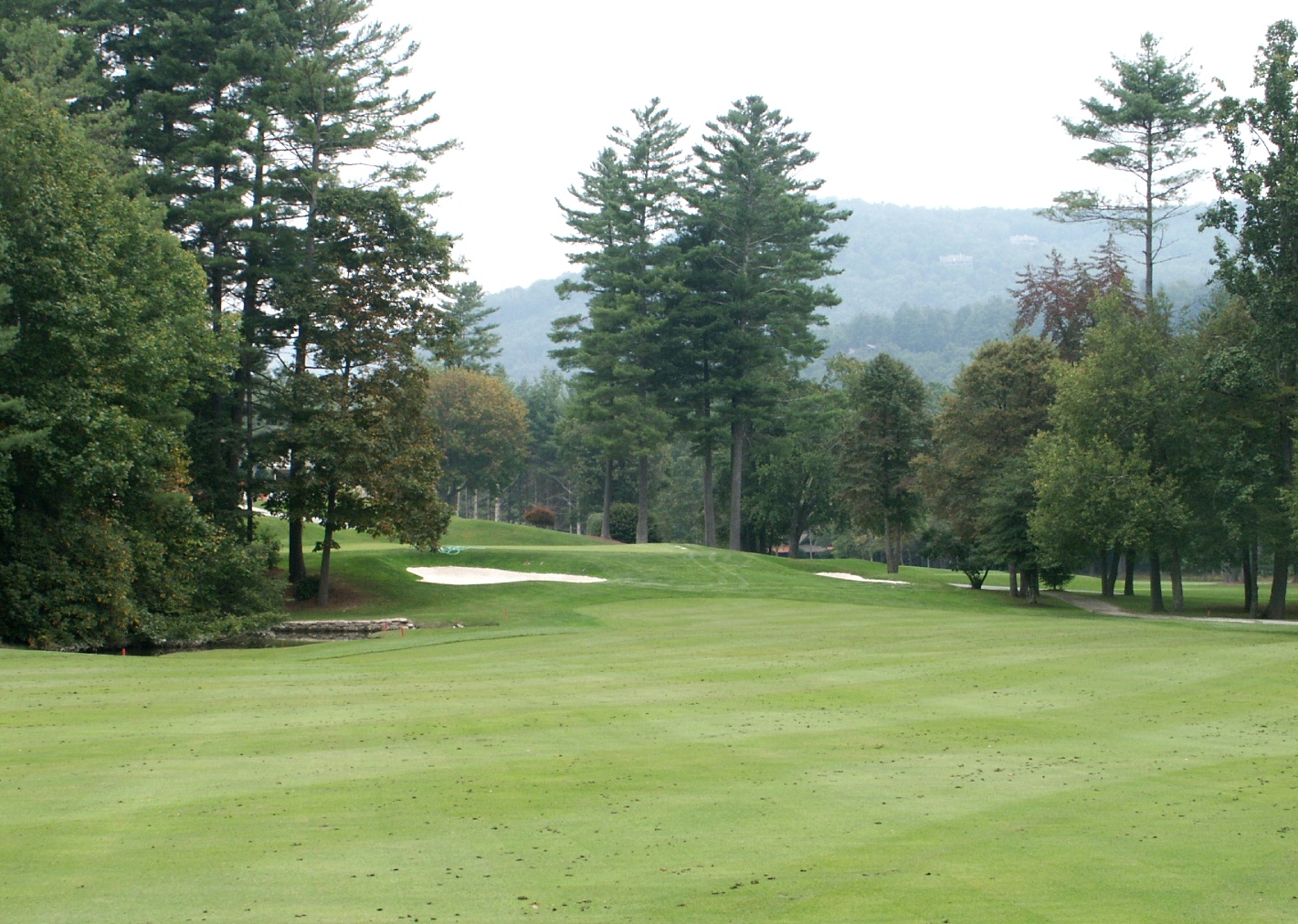
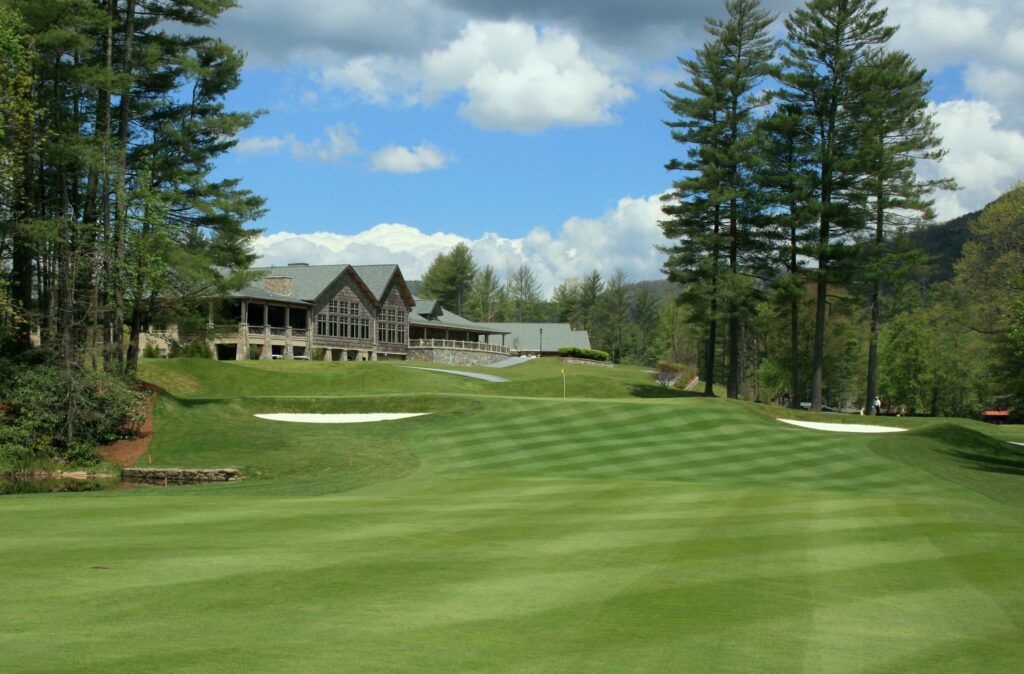
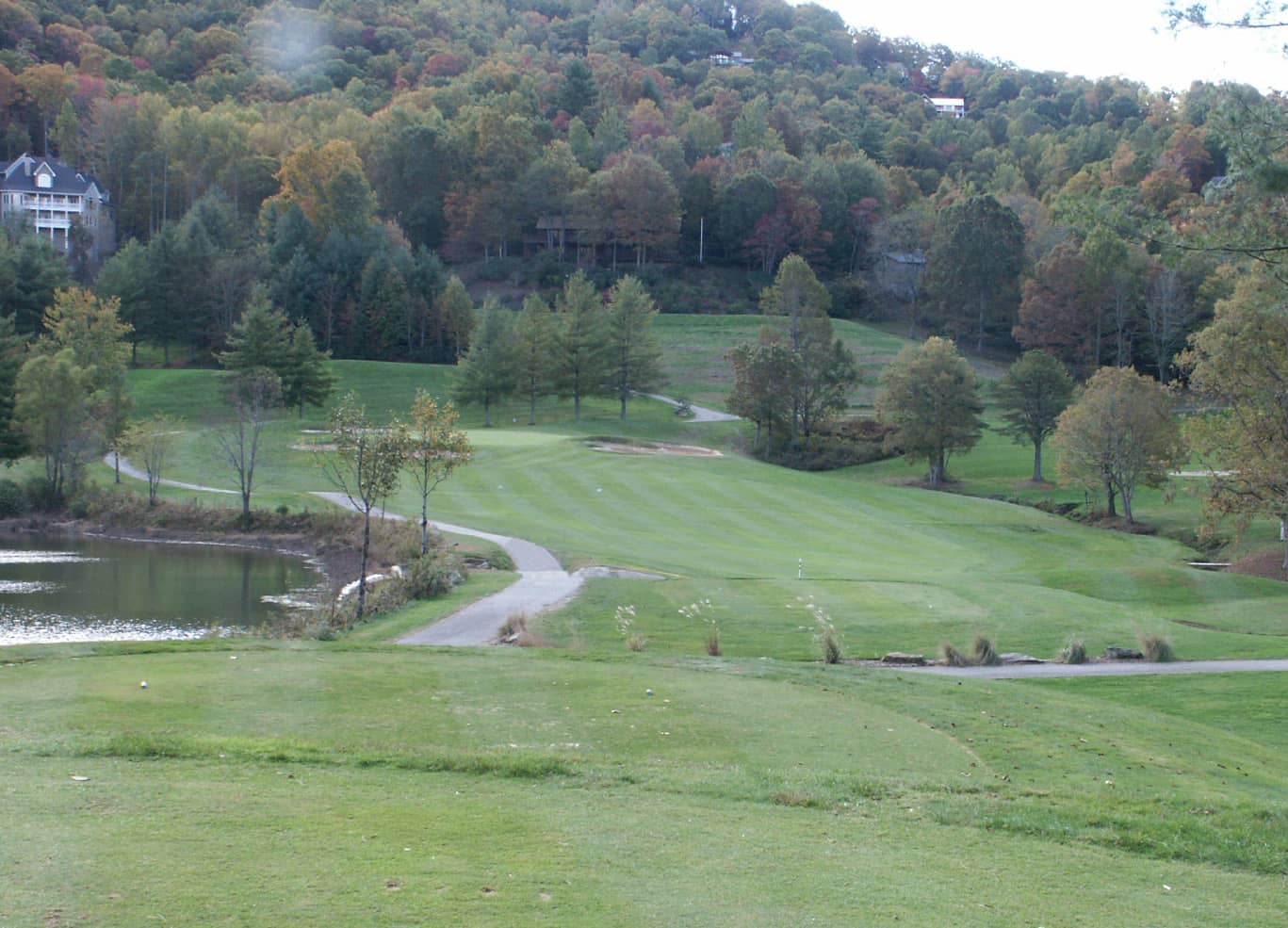
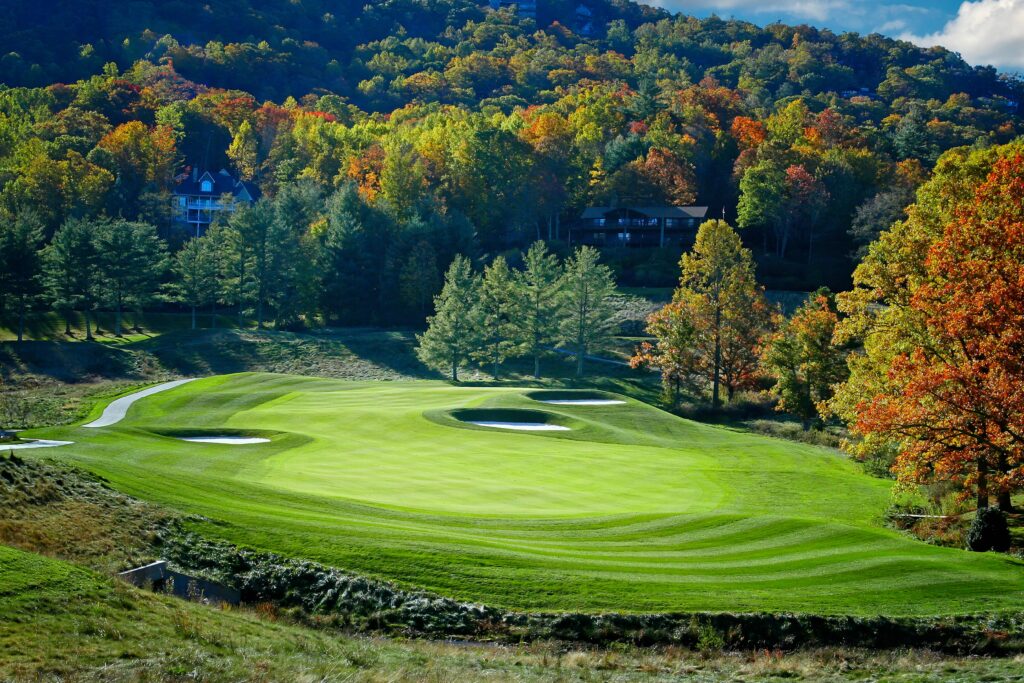
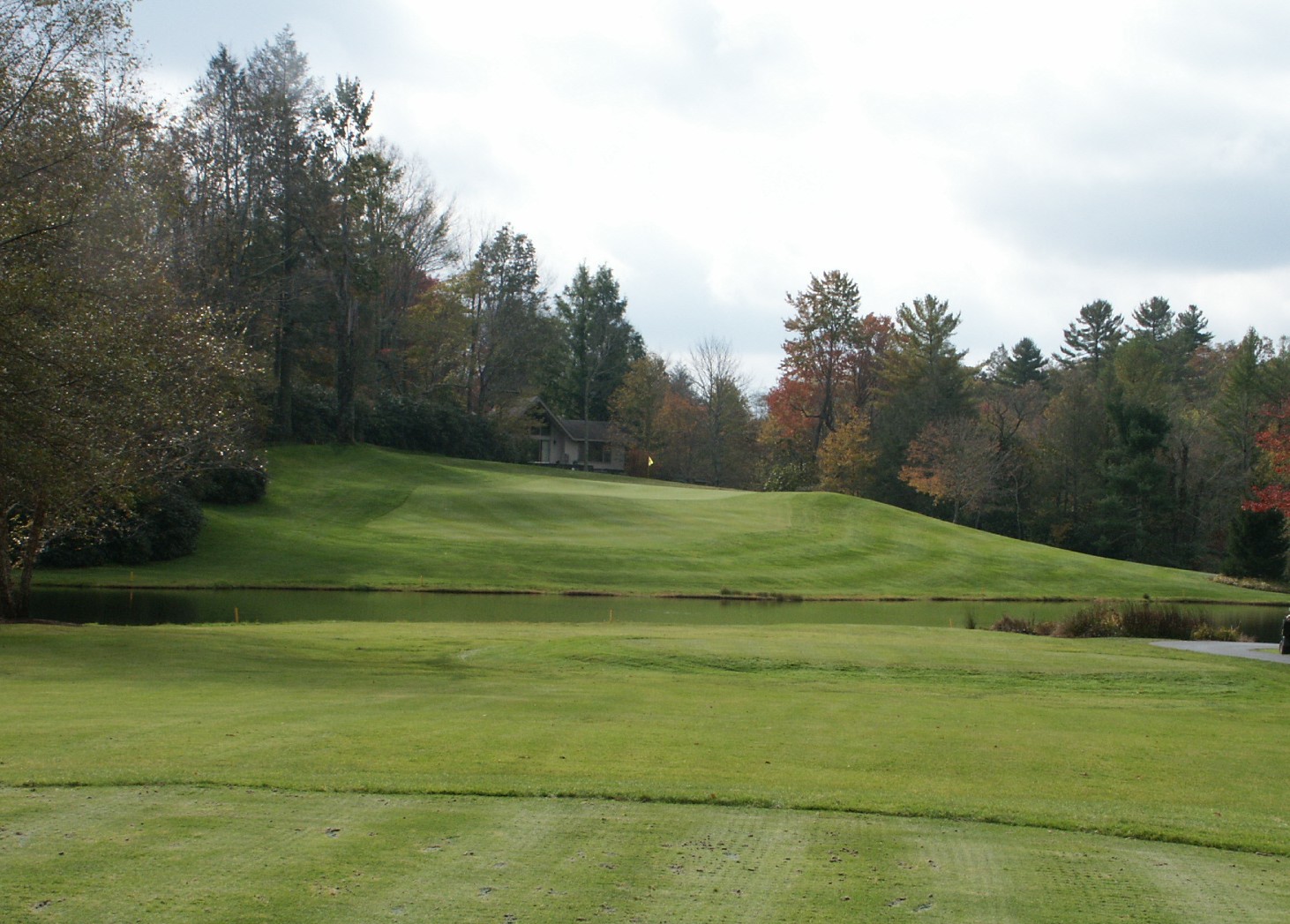
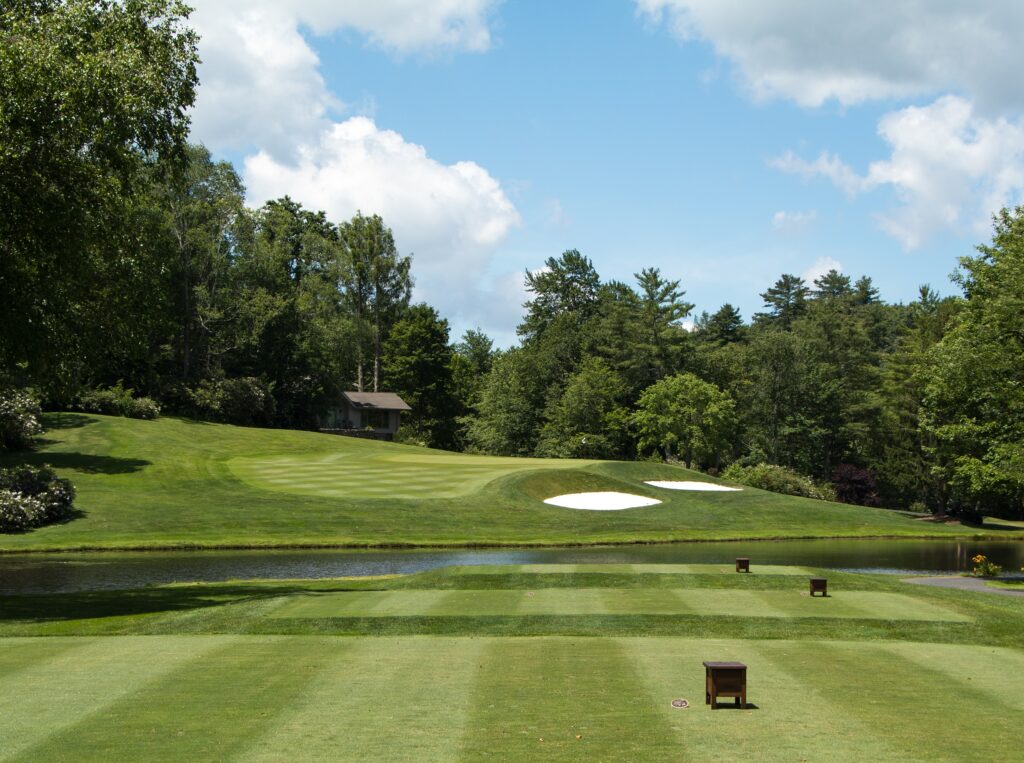
Truly a unique golf course in the western North Carolina mountains, Country Club of Sapphire Valley is a literal walk in the park. Opening up vistas to the rock faced mountains was an important goal during our renovation along with extensive drainage and bunker work.
Druid Hills - 17
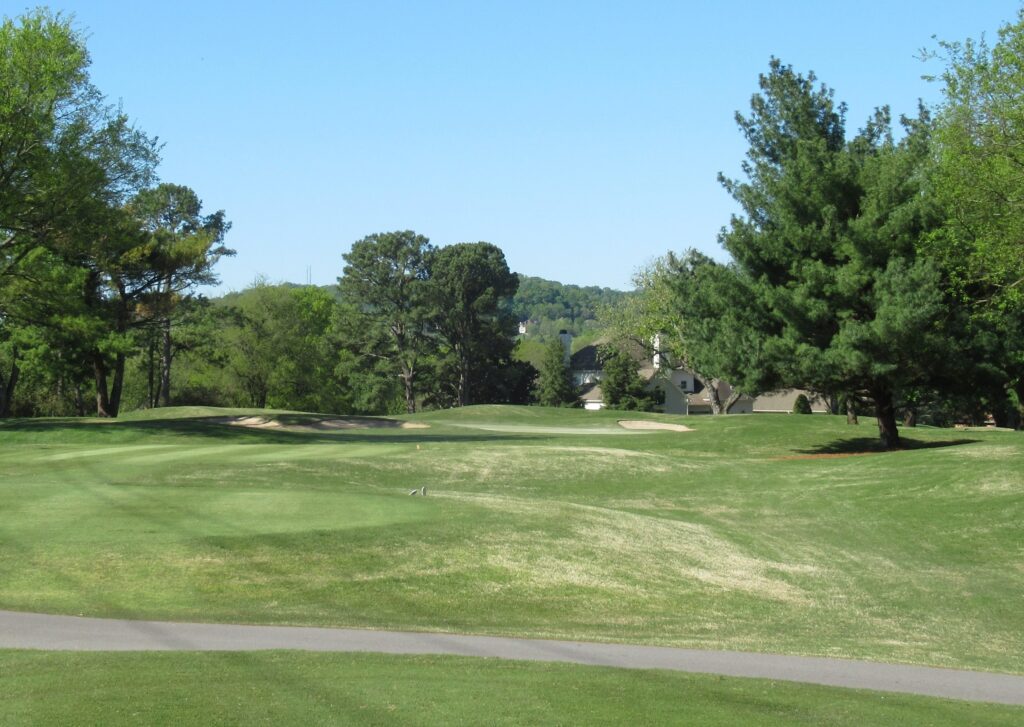
It’s sometimes hard to fathom the impact of bunkering on a golf course and how it informs the overall look and feel of a green complex. With minimal disturbance, new bunkering combined with modest green surround shaping has given Druid Hills a big boost in the perceived quality of the course.
Brentwood CC - 6
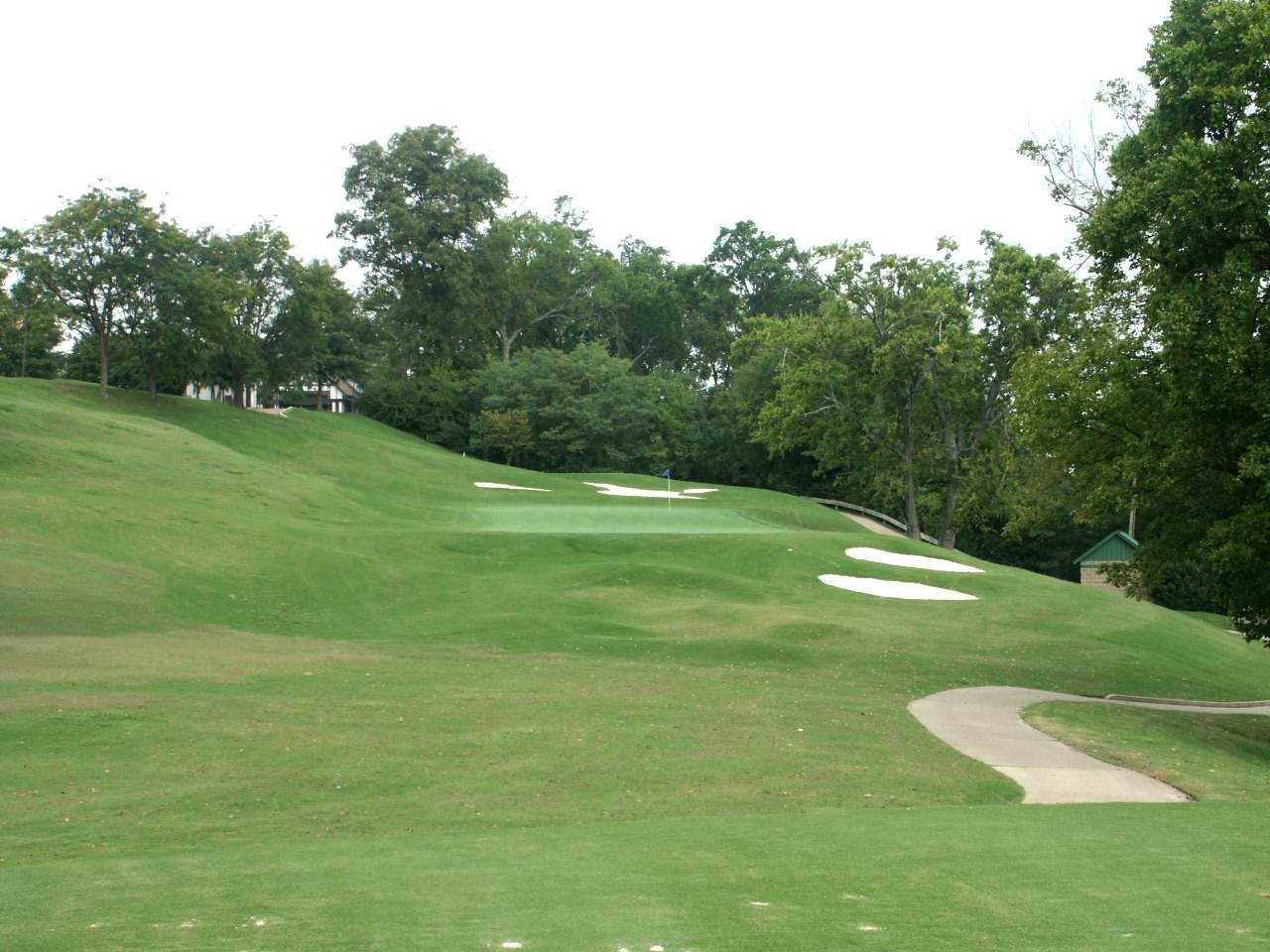
Flipping from a low green with high surrounding mounds, to a raised putting surface with bunkering cut into the land, the par three 6th at Brentwood has been turned upside down. Beware of the putting surface’s false edge between the bunkers as it falls away to a low chipping area.
Dalton G&CC - 15
Short par fours are some of our favorite holes to design. The 15th at Dalton G&CC can be attacked from several different strategic positions based largely on hole location. Bold bunkering with aggressive facial contouring and vastly improved drainage highlight this renovation.
Wildcat Cliffs CC - 2
A favorite transformation, on the original second hole at Wildcat the pond was barely invisible and only in play for a relatively poor tee shot. The new version adds excitement and tests one’s nerve and capabilities. A far right hole location will grab the attention of all levels of players.
McLemore - 17
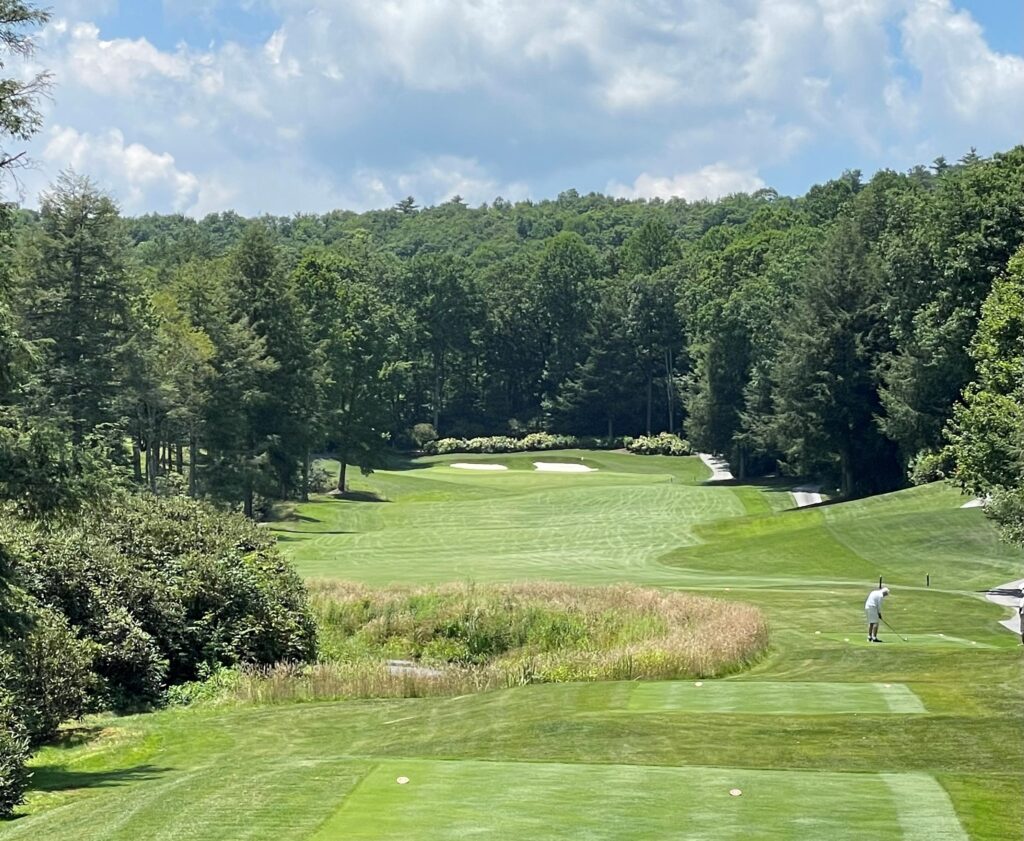
With a goal of creating more room to play less than perfect golf, the par five 17th at McLemore is favorite scoring hole. By pushing the green toward the edge of trouble on the right, a large bail out emerges in the expanded space. Aggressive play is challenged, while there is ample room for a more cautious approach
Sky Valley Golf Club - 16
By rotating the teeing ground well to the right, the entire view of the 16th hole at Sky Valley becomes clear. Aggressive play between the first two bunkers on the left side leaves only a pitch to the elevated green.
The Landings - 15
With its shallow green nestled along the edge of the marsh grasses, the 15th at The Landings – Palmetto is an exciting and dangerous short par three. Factoring the wind and executing precise distance control is an absolute must.
Highlands Falls CC - 2
The trees in the fairway led to much discussion as we worked with the members on the Master Plan for Highlands Falls CC. Our opinion centered on the negative impact to the less skilled member. In the end, we replaced a centerline tree with a different type of hazard.
Cullasaja Club - 6
Formerly a par five with a limited second shot landing area, the 6th at Cullasaja has been converted into a long par four, trading length and par with the fifth. The putting surface has been redesigned and lowered to better handle the demands of a lengthy approach.
Winter Haven CC - 8
While CC of Winter Haven underwent a total rerouting, some holes occupy similar space. The par four 8th was greatly lengthened and its new bunkering adds a three-dimensional quality to the flat topography.
Coronado CC - 7
Built on a tilted plane, Coronado Country Club features fabulous views and a ground game that impacts strategy on practically every hole. On the long par three 7th hole, the front bunker was repositioned to both catch balls heading toward the right slope and to allow for more room to use the ridge access onto the green.
Chattanooga G&CC - 9
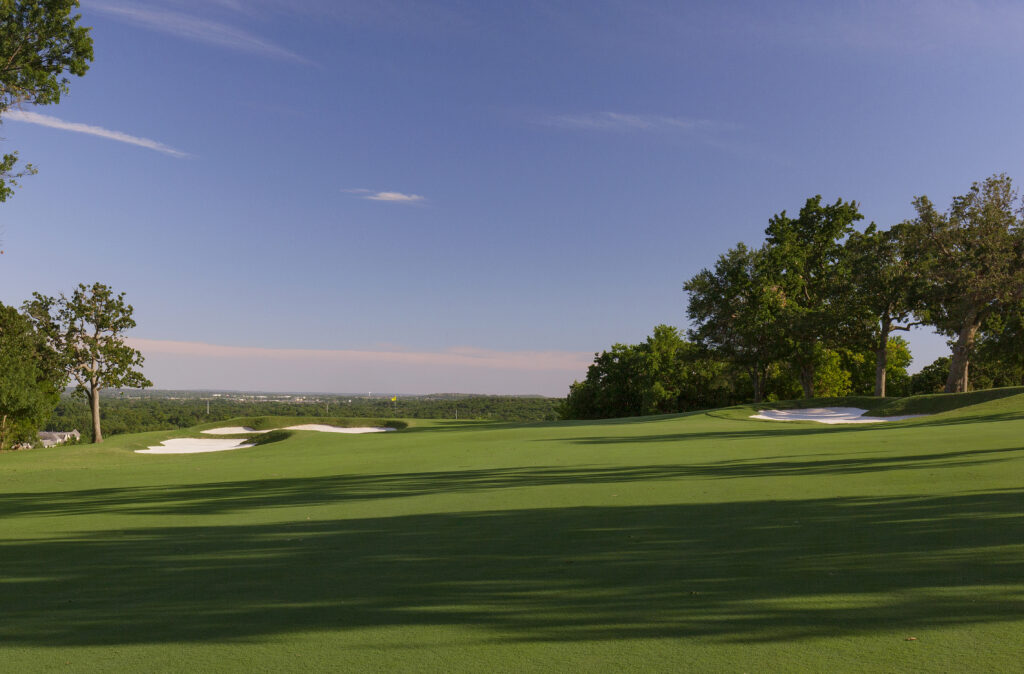
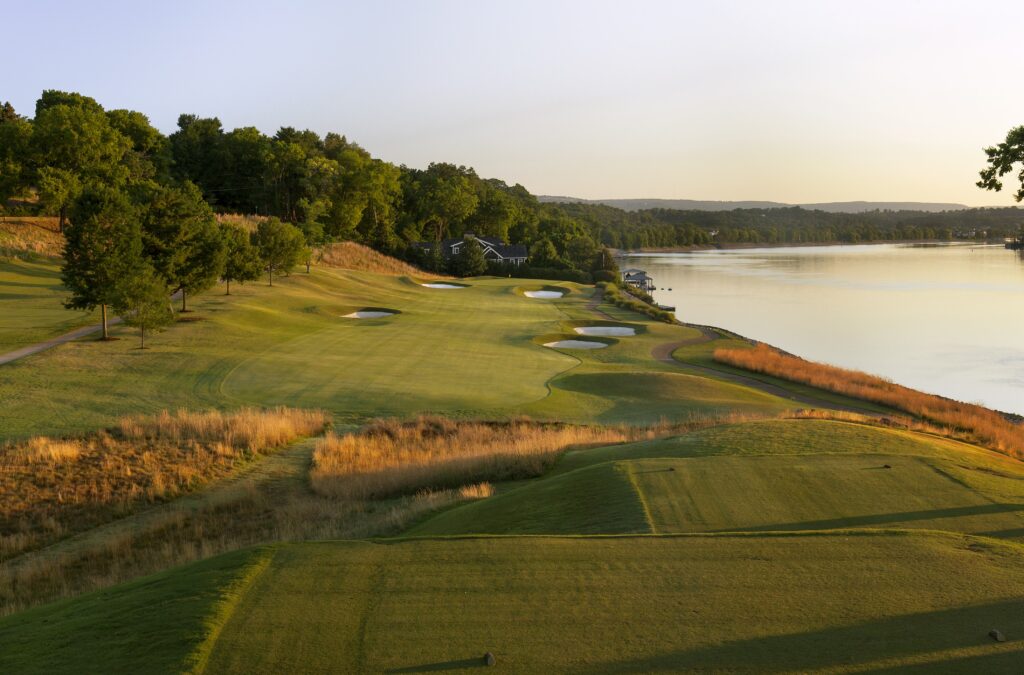
Playing on a bluff along the Tennessee River, the 9th at Chattanooga brings high tension to the close of the front nine. Additional hole locations and shaping to keep balls from simply bounding off the left slope have combined for a dramatic par three.
Pinetree CC
Pinetree is a lengthy test of golf, but is also blessed with three unique short par fours. The 14th is a favorite yet often frustrating example due to its treacherous putting surface. Angled bunkering adds an interesting choice from the tee for the longest hitters.
Oaks CC - 7
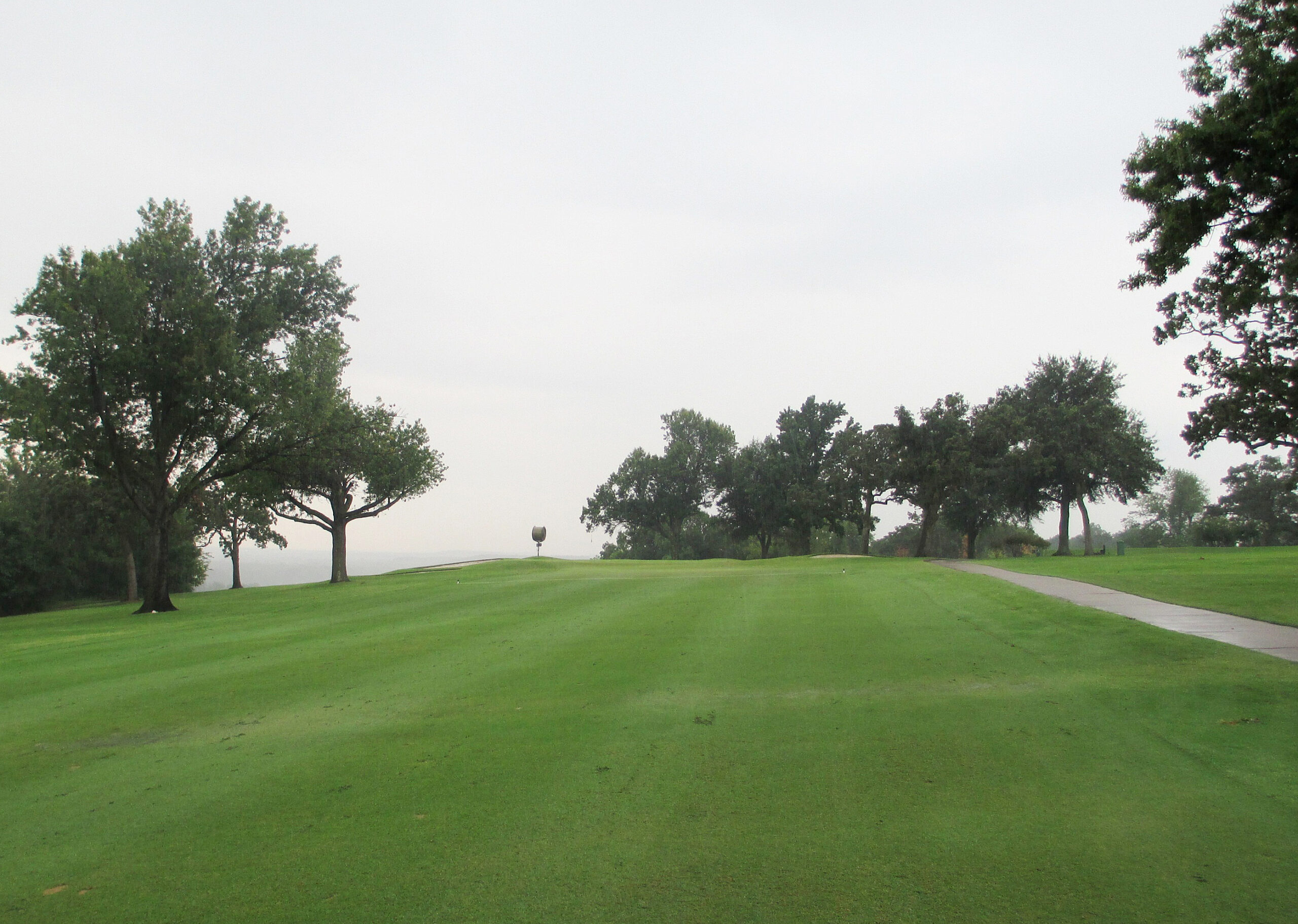
Pushing the green back 50 yards to the edge of big drop added much needed length and opened up a long vista toward Oral Roberts University. Hidden bunkering became visible and an unsightly cart path was shifted appropriately.
Santa Rosa G&BC - 16
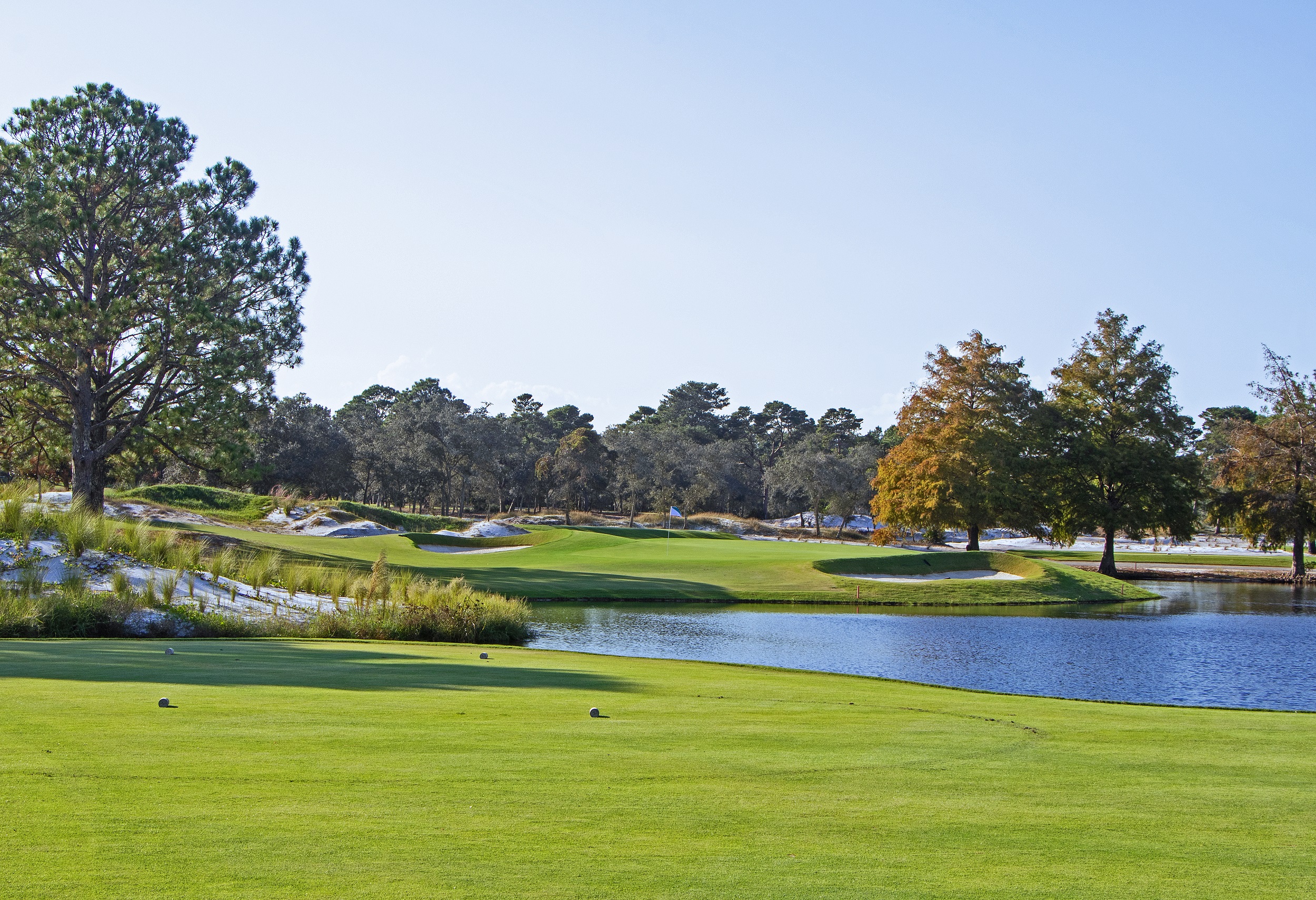
What a great example of our intent at Santa Rosa – bringing the beach dunes to the entire property. The putting surface was expanded and married to the water hazard lurking on the right side. Newly opened corridors have added an element of wind to the mix.
Valdosta CC - 13
We will often push a putting surface closer to an edge or hazard when given the chance. The “island” 13th at Valdosta reflects that approach as the green shifted toward the pond, resulting in a wide safe zone short of the newly shaped bunker.
Brentwood CC - 10
With a large oak hovering off the right edge of the putting surface, positioning from the tee is of utmost importance on the short 10th hole at Brentwood CC. Choosing a comfortable yardage and placing a tee shot near the fairway bunker make this a potential birdie hole.
CC of Winter Haven - 6
One of the few holes at Winter Haven in the same position at the original, the exposure to the lake and marsh grasses on the left side was a driving force. We reshaped the greens complex, connecting it to this prominent natural feature. All new teeing grounds added length and diversity to this challenging par three.
Cullasaja Club - 8
At Bergin Golf Designs we always consider options and how all golfers play the game. The 8th green at Cullasaja is nestled into an oxbow of the stream fronting the green. We leveled the crowned fairway approach and reduced the quantity of sand surrounding this complex.
Dalton G&CC - 6
What a beautiful setting for a par three. The green was pushed back slightly while the right-side chipping area was reshaped. Cutting the bunkers into the ground is a common preference for Bergin Golf Designs.
Santa Rosa G&BC - 18
Added length and looming oaks work together to create a formidable finish to fabulous day at Santa Rosa. Natural sandy features have been implemented from the first hole through the eighteenth, giving this coastal club its own unique identity.
Highlands Falls CC - 10
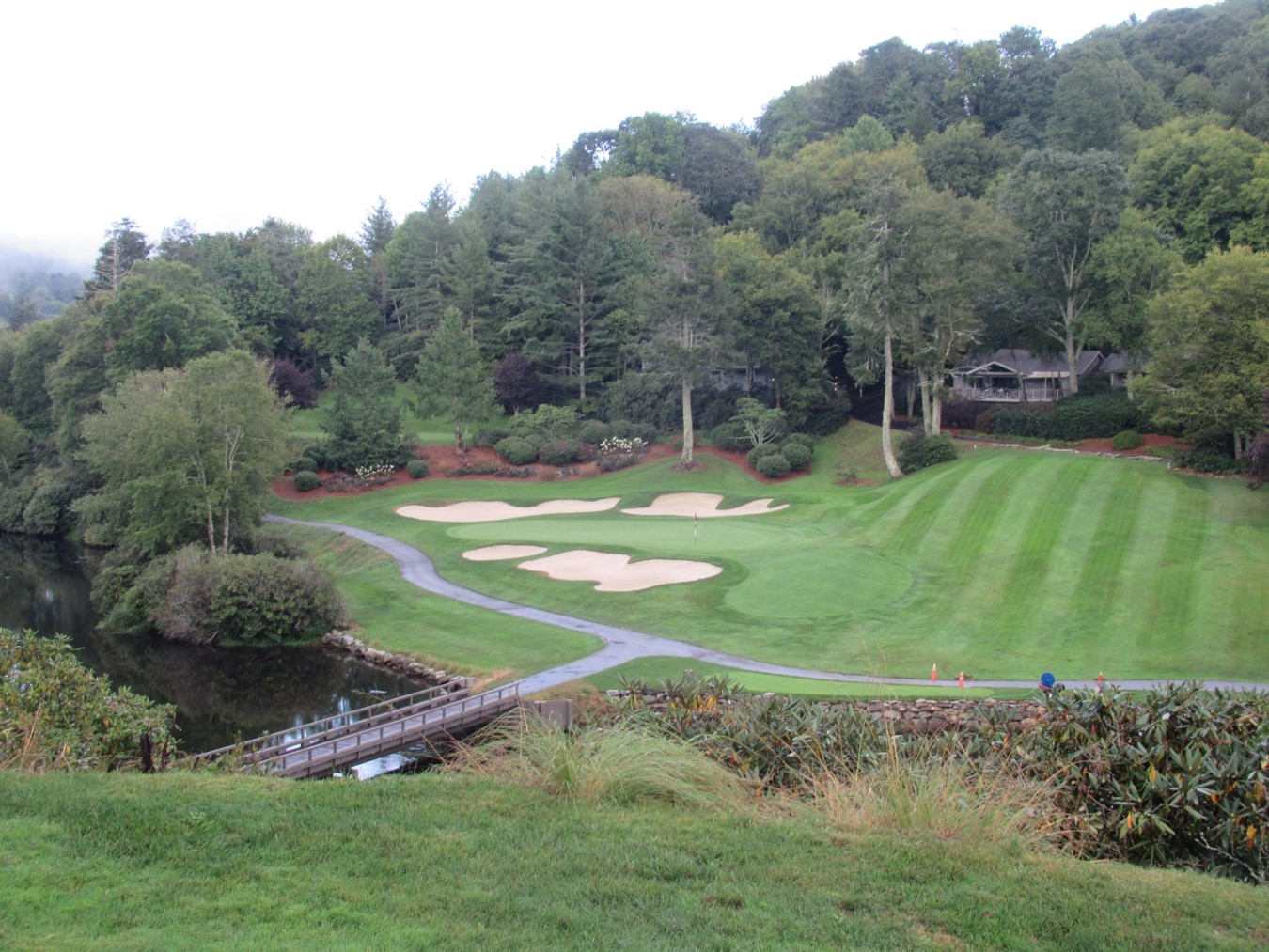
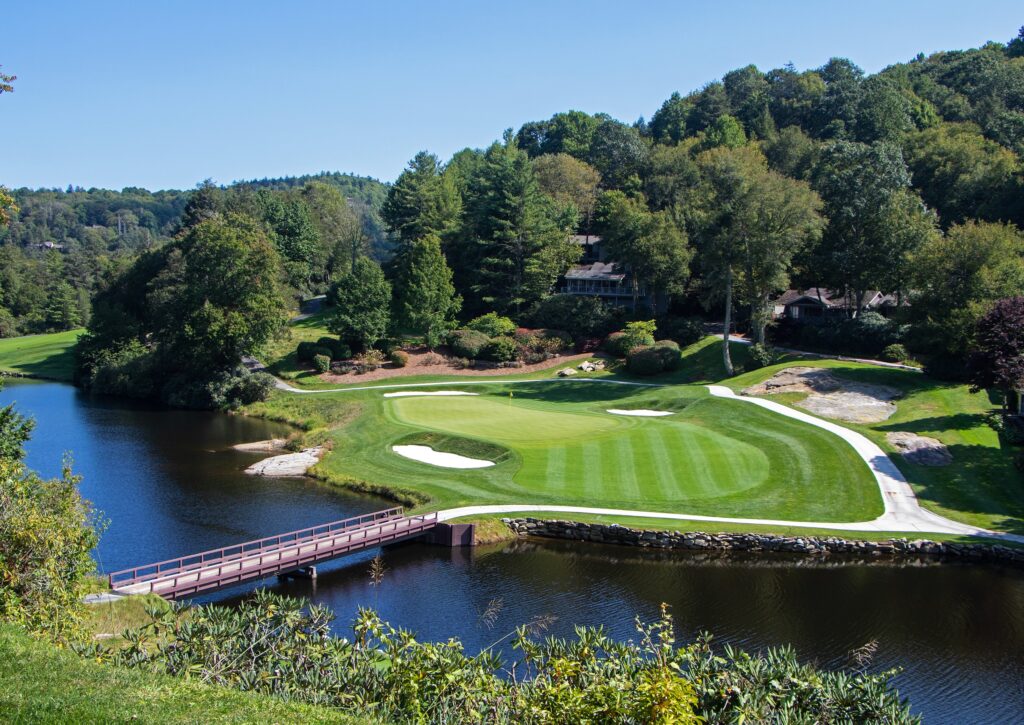
By shifting the cart path to the right side, the 10th green could be relocated to the edge of the pond. Rock outcroppings were exposed and the view from behind the clubhouse has been greatly enhanced.
Wildcat Cliffs CC - 6th
Creating more playable area and limiting the chance of the ball rolling down the slope was critical to this transformation. New bunkering helps create a hanging hole location at the back right section of the green.
Coronado CC - 14
Playing downhill and sliding to the right, the lone par five on the back nine presents a terrific scoring opportunity. Rather than three bunkers crossing the fairway, an impressive lone bunker presents a formidable hazard yet allows ground play to its left side.
Dalton G&CC - 9
Site of Bill Bergin’s Georgia Amateur victory, Dalton G&CC holds a special status amongst our work. Bold bunkering and challenging green complexes make this course a stern test for everyday play and competitive events.
Brentwood CC - 16
There are times when a transformation is less strategic and more about style. Our work on the lengthy par three 16th at Brentwood is subtle at first glance. Well framed bunkering and an enhanced right side chipping area highlight our work.
Mary Bergin
Business Manager
Bergin Golf Designs is managed by Bill’s wife, Mary, who joined the company in 1999. Having worked in international auditing as well as commercial real estate, Mary brings the skills necessary to oversee administrative, contractual, and financial matters for the company. She earned her MBA from the Thunderbird School of Global Management, and bachelor’s degrees in economics and international studies from Miami University. Mary’s attention to detail and steady leadership ensure the efficient operation of Bergin Golf Designs.
Callie Bergin Powell, NCIDQ
Marketing Associate
Making our firm truly a family affair, Callie Bergin Powell joined the company in March, 2025. Following a successful tenure with Tryba Architects and Ware Malcomb in Denver, CO, Callie brings her design, rendering and marketing abilities to Bergin Golf Designs. In addition to her work at Tryba, Callie served on the Board of the International Interior Design Association as the Rocky Mountain Chapter’s Director of Digital Publishing, overseeing the organization’s website and social media accounts. Callie has an interior architecture degree from Miami University and earned her NCIDQ certification in 2022.
Albie
Road Warrior
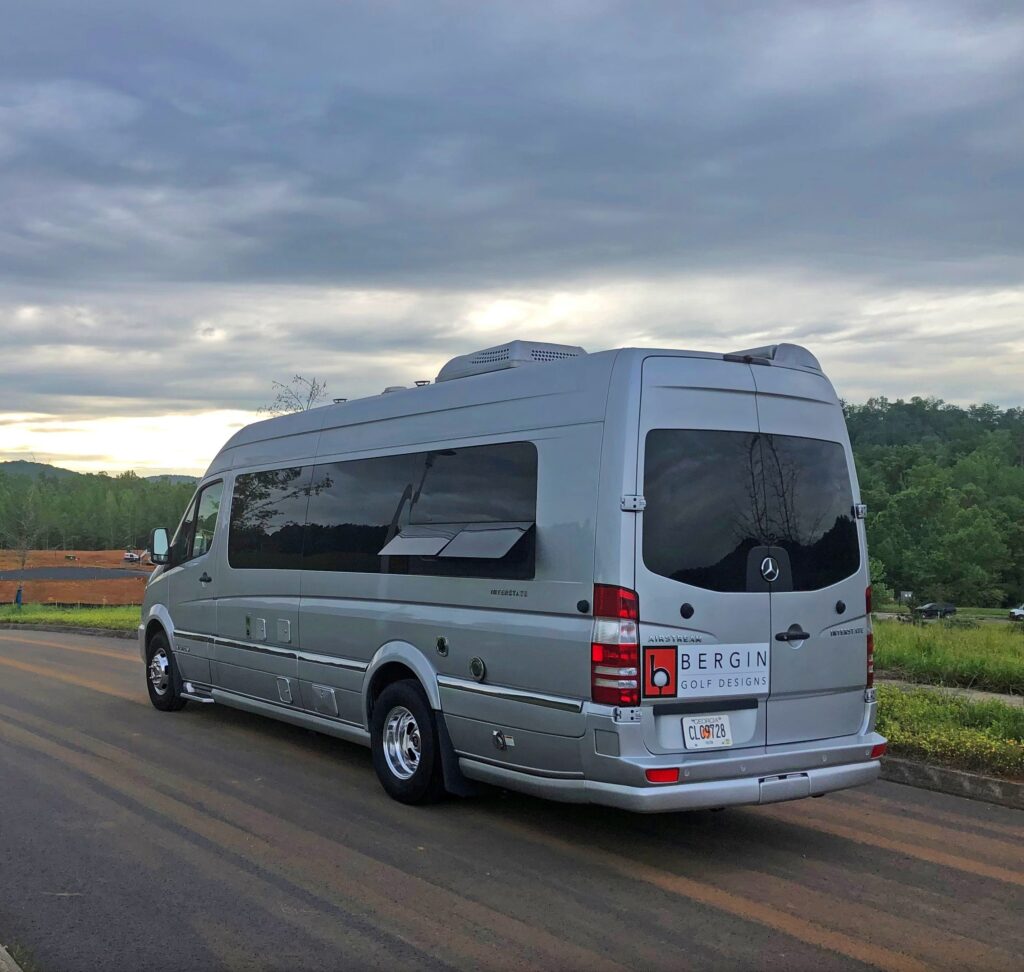
A key component to everyday life and project management is Bergin Golf Designs’ not so secret companion, Albie. Seen traveling across most of the Southeastern United States, Albie offers a new dimension in work productivity. When the van is on the road, someone is in the “mobile office’ getting work done.
Additionally, Bergin Golf Designs is able to keep materials and supplies within easy reach. Those supplies include our temperamental, yet essential, grade rod, as well as paint guns, hand levels, range finders and rugged tablets, allowing us to have everything we need for project management at the ready. A key part of Bergin Golf Designs’ success, Albie has been with the company since 2019.
Justin Killingsworth
Design Associate
After an initial stint with Bergin Golf Designs from 2006-2009, we were fortunate to have Justin Killingsworth rejoin the company in the fall of 2022. Involved in all aspects of plan production and presentation, Justin is able to express our proposed designs in graphic form. His presentations help our clients visualize potential changes to a hole or the land. Justin’s work has continued to advance to include strategic design and detailed grading plans. A member of the ASGCA Tartan Program, Justin is working toward full membership with the ASGCA.
Justin obtained a master’s degree in landscape architecture from Louisiana State University and a degree in Ornamental Horticulture from the University of Tennessee, combining his love for the game with a well-planned education. As a student at the University of Tennessee, Justin obtained plant knowledge and construction experience by interning for four years with a landscape design company. His training consisted of developing design concepts, creating artistic renderings, and executing field implementation. As a graduate student at LSU, Justin’s internship allowed him to assist with various projects ranging from city master planning to small scale park design.
Matt Bergin - ASGCA
Design Associate
Matt Bergin joined Bergin Golf Designs in 2016 as a draftsman. Fast forward to today, Matt is involved in both strategy and grading plans, influencing and contributing to the overall design and execution of our projects. Matt also performs site visits – both in the initial design phase, as well as during construction supervision. After four years in the ASGCA Tartan Program, Matt became a full member of the ASGCA in the fall of 2025.
In his initial years with the company, Matt quickly acquired the AutoCad skills necessary to produce construction documents. He also assumed and continues to hold responsibility for all drone flights, producing topographical base maps, as well as photography and videography, during construction and upon course completion.
Growing up in the Bergin family, golf has always been a part of Matt’s life. During his college years, Matt began his work experience in the industry at Cherokee Town & Country Club in Atlanta, GA, gaining valuable experience in golf course operations and maintenance while working on Cherokee’s grounds crew and in the Pro Shop. A graduate of Rhodes College with a degree in Theatre Arts, Matt’s artistic aptitude and set design experience have greatly contributed to an appreciation of spatial relationships and an understanding of scale. Matt brings that knowledge to golf course design – the stage for the game of golf.
Spencer Oliver
Agronomic Associate
Spencer Oliver joined Bergin Golf Designs in February 2022, bringing agronomic expertise to the BGD team. Assisting with construction and grow-in on over 25 Bergin Golf Designs projects, Spencer has keen insight into the important relationship between the superintendent, contractor and the architect – before, during and after project completion. Spencer’s love for the game and passion for detailed course management have resulted in him being a great asset to our company. Now in a consulting role, Spencer’s agronomic and course management skills,combined with BGD’s design philosophies and expertise, offer an outstanding package to our clients.
Prior to joining Bergin Golf Designs, over the course of 20+ years as a golf course superintendent, Spencer was involved with golf course construction, maintenance, and renovations. During his early superintendent career, Spencer worked on many notable courses such as: Callaway Gardens, The Golf Club of Georgia, Kiawah Island, Hawks Ridge, Barnsley Gardens and Dunwoody Country Club. It was during his nearly 17 years at Dunwoody Country Club where Spencer developed his own philosophies of golf course maintenance and where he matured as a golf course superintendent. His ability to see things not as they are, but what they could be, was well evidenced during his time there.